
Static Random-Access Memory Market Growth Driven by Demand for High-Speed Data Processing Solutions
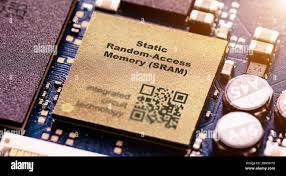
High-Density SRAM Architecture Innovations and Next-Generation Cache Integration in Scalable Microprocessor Frameworks
The global semiconductor ecosystem is witnessing a transformative shift toward high-efficiency computing architectures, where memory access speed and latency mitigation serve as critical determinants of overall system performance. Within modern heterogeneous computing environments, Static Random-Access Memory continues to fulfill an irreplaceable role as high-speed cache memory embedded directly onto processing dies. As artificial intelligence workloads, high-performance computing clusters, and real-time autonomous processing platforms demand unprecedented data throughput, the strategic importance of advanced SRAM cells has magnified significantly. Designers are currently forced to navigate complex physical tradeoffs between dynamic power consumption, leakage currents, cell area scaling, and operating stability at lower voltage thresholds. Traditional bit-cell scaling techniques encounter severe quantum mechanical hurdles at advanced sub-nanometer nodes, prompting memory architects to explore non-planar transistor topologies, subterranean interconnects, and innovative assist circuitry. To understand how these architectural pivots shape commercial ecosystems, industry leaders closely evaluate the overall Static Random-Access Memory Market analysis to align proprietary tape-outs with broader supply chain trajectories.
Concurrently, the manufacturing landscape for ultra-dense memory arrays is undergoing substantial restructuring driven by extreme ultraviolet lithography integration and multi-gate transistor shifts. The transition from classic FinFET arrangements to gate-all-around architecture directly affects SRAM cell read-write margins, noise immunity, and yield viability across massive silicon physical footprints. Because embedded cache occupies a substantial percentage of total system-on-chip real estate, chip designers must continuously balance bit density gains against power-performance-area parameters. Furthermore, the rapid growth of edge devices requires specialized ultra-low-power SRAM variants featuring adaptive power-gating and retention modes to preserve battery energy without compromising rapid wake times. These technological adjustments require substantial capital investments in advanced semiconductor fabs and specialized electronic design automation tools capable of predicting statistical variability in ultra-scaled arrays. System integrators, fabless design firms, and wafer foundries must maintain continuous multi-disciplinary collaboration to ensure that next-generation memory blocks meet the rigorous reliability standards mandated by automotive electronics, industrial robotics, and enterprise data infrastructures.
Frequently Asked Questions
Why is Static Random-Access Memory preferred over Dynamic RAM for CPU cache applications?
SRAM utilizes multi-transistor flip-flop configurations that store data continuously without requiring periodic refresh cycles. This structural design provides significantly faster read and write response times compared to DRAM, making SRAM ideal for latency-critical L1, L2, and L3 processor caches despite its larger physical footprint per bit.
How do advanced semiconductor process nodes impact SRAM cell scaling?
As transistor geometries shrink to sub-3nm nodes, SRAM scaling faces severe physical limitations due to short-channel effects, threshold voltage variability, and increased parasitic resistance. Modern fabs utilize specialized gate-all-around architectures and write-assist technologies to maintain cell stability and minimize leakage currents at sub-nanometer scales.
➤➤➤Explore MRFR’s Related Ongoing Coverage In Semiconductor Industry:
Restaurant Delivery Robot Market
Magnetoresistance Sensor Market
North America 4 Inches Semi-Insulating Silicon Carbide Wafer Market
Building Management Systems Market

 English
 Arabic
 French
 Spanish
 Deutsch
 Turkish
 Dutch
 Italiano
 Russian
 Romaian
 Portuguese (Brazil)
 Greek