
RTD Market Analysis 2026: Coffee, Functional Beverages, Cocktails & Consumption Trends
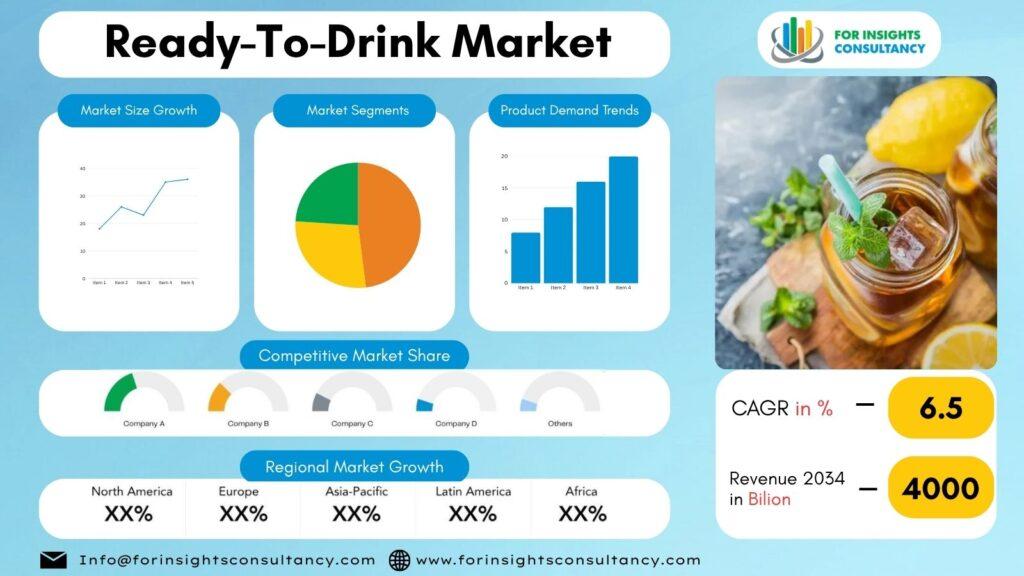
Market of Ready-To-Drink Beverages (RTD) in 2026
What factors drive the market of Ready-To-Drink beverages in 2026?
Convenience, portability, consumption occasion, product customisation, nutritional functionality, moderation, and transformation of traditional beverage experiences into a packaged format are some of the key drivers transforming the ready-to-drink beverage market. The concept of Ready-to-Drink beverages is not limited to the traditional concept of soft drinks anymore. Coffee, tea, protein drinks, energy drinks, functional hydrations, sparkling beverages, cocktails, hard seltzers and many other types of packaged beverages fight for the consumers' interest, offering them an option of immediate consumption without any preparation.
Innovations made by PepsiCo in 2026 in terms of beverages are illustrative of this trend. PepsiCo launched Starbucks Coffee & Protein – a ready-to-drink beverage containing 22 grams of complete protein and 5 grams of prebiotic fibre and Mountain Dew – ready-to-drink version of "dirty soda" popularised on social media. (pepsico.com)
What is a Ready-To-Drink beverage?
Ready-to-drink means a beverage that is sold in a package for immediate consumption without preparation of the customer. Bottles, cans, cartons and other sealed packages are all RTD products.
This category includes both alcoholic and non-alcoholic beverages. This difference matters since alcoholic RTDs and non-alcoholic RTDs
Which are the key types of RTDs?
The RTD range consists of carbonated soft drinks, bottled water, sports and electrolyte drinks, energy drinks, RTD coffee, RTD tea, protein drinks, juices, functional drinks, plant-based drinks, ready-to-drink cocktails, hard seltzers, malt beverages, RTDs made from beer or spirits.
According to PepsiCo, RTD coffee and RTD tea make up part of their core beverage range, along with sports drinks and modern soda drinks, in the United States. (pepsico.com)
As such, market definition becomes very important when trying to estimate market size. The calculation will be entirely different if it involves a market consisting of packaged alcoholic cocktails, as opposed to all other RTD beverages.
Why are consumers opting for RTD beverages?
It all comes down to convenience. Consumers have access to packaged beverages in a supermarket, convenience store, coffee shop, vending machine, fitness club, fueling station, restaurant, airport, stadium, or online store without having to prepare the beverage.
Portability is another important factor. Diageo's 2026 annual report states that RTDs are portable, consistent and can provide good value, compared to on-premise consumption. (diageo.com)
Is protein becoming a promising RTD opportunity?
Protein is now the main theme in formulating and promoting ready-to-drink beverages. RTD protein shakes offer a convenient way for consumers to get their protein without being stuck to a regular mealtime.
The example of PepsiCo reformulating its Muscle Milk in 2026 demonstrates this tendency. The company defines Muscle Milk as the ready-to-drink protein shake brand and reformulated its products with ultra-filtered milk, which contains 26-42 grams of complete protein per serving and contains no artificial sweeteners, flavors, or colors. (pepsico.com)
As a result, the growth of the protein beverages category implies that RTD products start competing with nutrition products and meal replacement drinks instead of only conventional beverages.
Why do functional beverages enter the RTD market?
Functional beverages let brands give an extra benefit to the concept of convenience, such as getting protein, hydration, electrolytes, energy, fiber, or any other nutritional benefits.
Starbucks has introduced its line of Coffee & Protein that combines coffee and protein and prebiotic fiber, whereas PepsiCo offers various hydration and nutrition-based RTD products. (pepsico.com)
The success of this strategy depends on consumers' perception of benefit and enjoyment of the product.
Related Market Reports
Energy Drink Market Size, Shares and 8.18% CAGR by 2034
Beer and Energy Drinks Market Report: Size, Share & Analysis 2034
Alcoholic Drinks Market Insights 2026: Trends & Forecast 2034
India Alcohol Market Report — Beer, Spirits, RTD Beverages, Wine, 2034

 English
 Arabic
 French
 Spanish
 Portuguese
 Turkish
 Dutch
 Italiano
 Russian
 Romaian
 Portuguese (Brazil)
 Greek