
Mastering the Lens: Documentation Protocols for Vehicle Surveillance
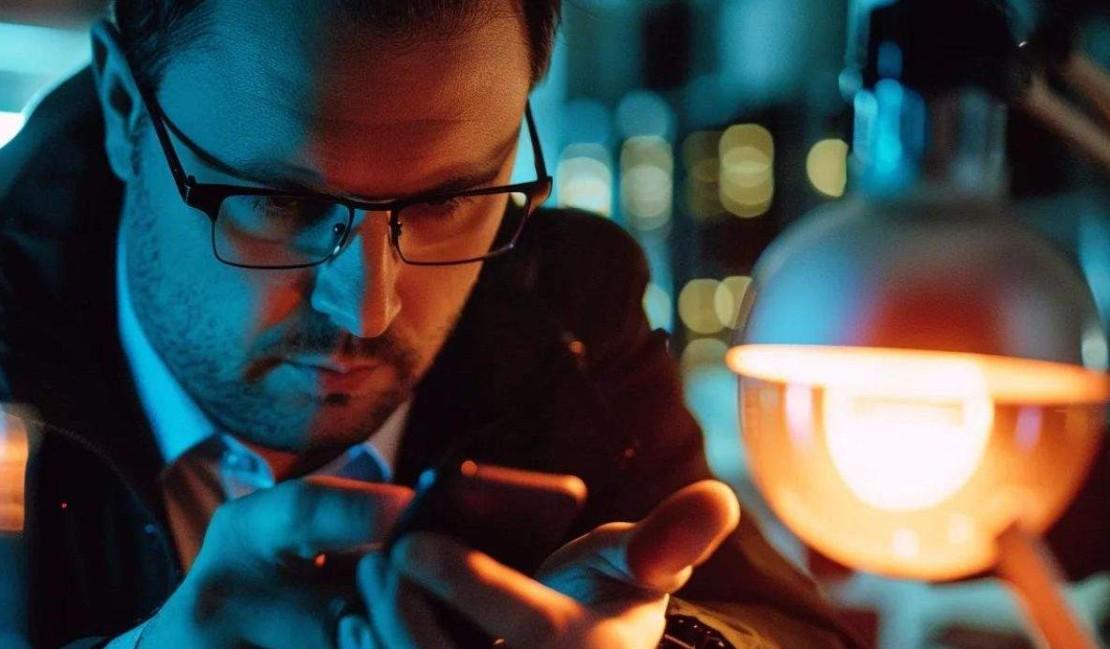
In the world of professional surveillance, the ability to document a subject’s movements with absolute accuracy is a foundational skill that separates amateurs from seasoned experts. When monitoring a vehicle, capturing time-stamped photographic evidence is more than just taking pictures; it is the process of creating a chronological, irrefutable record of presence and activity. Courts and clients demand evidence that can withstand rigorous scrutiny, which means every image must serve a distinct evidentiary purpose. Whether you are conducting corporate investigations or personal surveillance, the methodology you employ—from camera settings to the consistency of your documentation—dictates the legitimacy of your work.
The Technical Imperative of Time-Stamped Evidence
The utility of a photograph in an investigation is heavily dependent on its context. An image of a subject’s vehicle parked outside an unknown location is virtually worthless if it cannot be tied to a specific point in time. Therefore, the implementation of reliable time-stamping is non-negotiable. Modern cameras and digital recording equipment allow for metadata embedding, which captures the exact date, time, and, in some cases, the geographic coordinates of the shot. However, reliance on metadata alone is a tactical error; a true professional ensures that the time is visible on the image itself, if possible, or maintains a meticulous, synchronized logbook that corresponds to the digital file names. This attention to detail creates a seamless timeline that demonstrates a clear chain of custody.
Strategic Positioning and Shot Composition
Documenting vehicle movements requires a deep understanding of perspective and the limitations of your vantage point. To prove a vehicle’s presence, you must capture more than just the bumper; you must capture the context. This includes the vehicle's license plate, the driver’s profile if visible, and prominent landmarks that confirm the location of the sighting. A static photograph of a parked car is often insufficient to show activity; you must document the arrival, the presence, and the departure to create a complete movement profile. This involves strategic positioning that allows you to remain undetected while keeping the vehicle in clear view throughout its operational cycle. Balancing the need for a clear view with the absolute requirement for cover and concealment is a delicate art. Mastery of these surveillance tactics is frequently cultivated through the practical modules of a professional private investigator course, which teaches students how to compose evidentiary photographs that hold up under cross-examination.
Managing the Workflow and Chain of Custody
Once the photographic evidence is captured, the management of these files becomes the new priority. Investigators often handle hundreds of images in a single day of surveillance. Without a structured filing system, you risk losing critical evidence or failing to authenticate the images later. You must adopt a rigorous workflow: downloading files daily, backing them up in secure, encrypted locations, and renaming files with consistent naming conventions that include the date, location, and subject descriptor. This system ensures that when it is time to compile a report, you are not scouring through disorganized folders. Furthermore, documenting the source of the camera’s time synchronization is essential for authenticity. Demonstrating that your equipment was calibrated to a master clock at the start of the day is a small but vital detail that adds massive credibility.
Ethical Boundaries and Legal Compliance
While documenting vehicle movements, an investigator must always remain acutely aware of the thin line between legitimate surveillance and illegal intrusion. Privacy laws vary significantly by jurisdiction, and capturing photographs in areas where a subject has a "reasonable expectation of privacy" can jeopardize the entire investigation and expose the investigator to legal liability. Knowing the distinction between public thoroughfares, semi-private parking areas, and private residential property is essential. Your documentation must always reflect adherence to these ethical boundaries. If you inadvertently capture images that violate privacy rights, you must know how to sanitize your evidence log to maintain compliance. Ethical practice is not just about staying out of trouble; it is about ensuring your evidence remains admissible and your reputation as a professional remains untarnished.
Evolving Surveillance Tactics in a Digital Age
The craft of vehicle surveillance is continually evolving as subjects become more aware of detection methods and technology changes the landscape of movement tracking. Today's investigator must be adept at using high-zoom lenses, low-light photography equipment, and stealth tactics to document activity in diverse environmental conditions. A subject might attempt to lose a tail by taking erratic routes, or they might operate their vehicle in heavy traffic where traditional photography becomes nearly impossible. Your ability to adapt your photographic techniques to these challenges determines your success rate. This constant adaptation requires not only technical knowledge of camera gear but also a deep understanding of human behavior and predictive movement analysis.

 English
 Arabic
 French
 Spanish
 Portuguese
 Deutsch
 Turkish
 Italiano
 Russian
 Romaian
 Portuguese (Brazil)
 Greek