
The Technology Platform: A Deep Dive Into Mission Critical Communication Systems
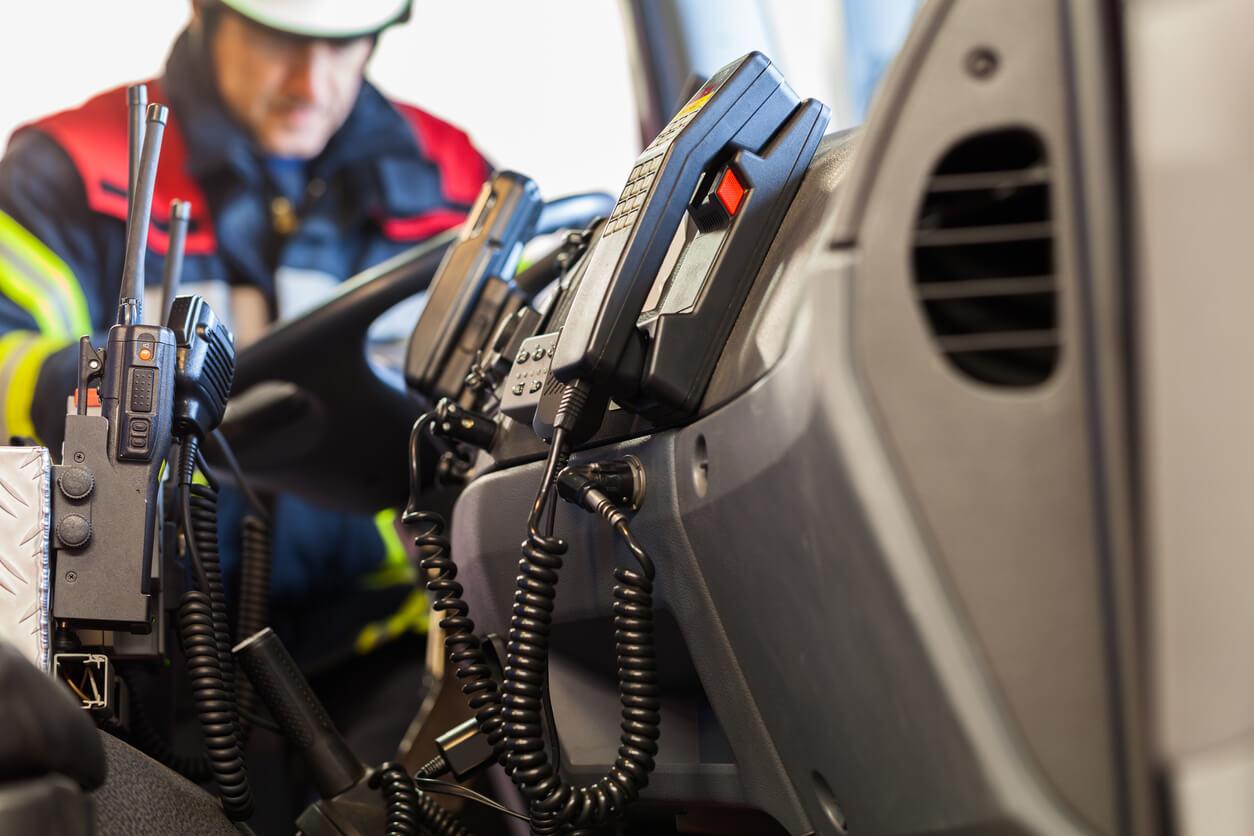
Defining the Foundational Platforms of Instantaneous Communication
In the specialized field of critical communications, the term "platform" refers to the fundamental technology standard and infrastructure upon which services are built. Choosing a Mission Critical Communication Market Platform is one of the most significant decisions a public safety agency or critical enterprise can make, as it determines capabilities, costs, and a technology roadmap for decades. The market is defined by a major schism between two distinct platforms: the legacy, voice-centric Land Mobile Radio (LMR) systems, and the emerging, data-centric mission-critical broadband networks based on 4G/5G standards. Understanding the characteristics, advantages, and limitations of each platform is essential to appreciating the massive technological transition that is currently underway across the globe, as organizations seek to balance proven reliability with the demand for advanced data capabilities.
The Legacy Platform: Voice-Centric Land Mobile Radio (LMR)
For over half a century, Land Mobile Radio (LMR) has been the bedrock platform for mission-critical voice communication. Built on standards like P25 (Project 25) in North America and TETRA (Terrestrial Trunked Radio) in Europe and other regions, LMR is a private network platform optimized for one thing: instantaneous, reliable push-to-talk (PTT) group calling. Its key strengths are its extreme resilience, low latency for voice calls, and robust security within a closed network. It provides essential features like direct mode operation (allowing radios to talk to each other without a network) and emergency alert buttons. However, its fundamental weakness is its narrowband nature, which severely limits data speeds. This makes it unsuitable for modern applications like video streaming, which is a major driver for organizations to look towards newer platforms.
The Next-Generation Platform: Data-Centric Mission-Critical Broadband
The future of the industry is firmly centered on the mission-critical broadband platform, based on global 3GPP standards for 4G LTE and 5G. This platform is designed from the ground up to handle high-speed data, enabling a host of new capabilities. The 3GPP has standardized a suite of "Mission Critical Services" (MCX), including Mission Critical Push-to-Talk (MCPTT), Mission Critical Video (MCVideo), and Mission Critical Data (MCData). This platform allows first responders to stream live video from body cameras or drones, access databases and records in the field, and share rich multimedia messages. Built with features like Quality of Service, Priority, and Preemption (QPP), this platform ensures that critical traffic is given precedence over commercial traffic on a shared network, providing the reliability needed for public safety use.
Hybrid Platforms: Bridging the Gap Between Voice and Data
The transition from LMR to broadband will not happen overnight. For the foreseeable future, the most common platform architecture will be a hybrid one. Many agencies are adopting a strategy that leverages the best of both worlds: continuing to use their highly reliable and fully-owned LMR network for mission-critical voice, while simultaneously using commercial LTE/5G networks for high-speed data applications on a separate device like a smartphone or tablet. To simplify this, device manufacturers have developed "converged" devices—ruggedized smartphones that also have a full-power LMR radio built-in, or LMR radios with Bluetooth connections to a smartphone. This hybrid platform approach allows organizations to manage the transition at their own pace, mitigating risk while still gaining the benefits of mobile data.
The Software Platform: Command, Control, and Intelligence
Layered on top of the network infrastructure is the increasingly vital software platform. This is the command center's view into field operations, enabling dispatch, incident management, and real-time situational awareness. Modern command-and-control platforms are evolving into powerful intelligence hubs. They are no longer just for voice dispatch; they integrate a multitude of data streams into a "common operational picture." This includes live video feeds from fixed and mobile cameras, real-time GPS locations of all personnel and vehicles on a map, alerts from IoT sensors, and data from records management systems. These sophisticated software platforms are what turn the raw voice and data from the network into actionable intelligence, allowing commanders to make faster, better-informed decisions during a crisis.
➤ In-Depth Market Studies by Market Research Future:
China Enterprise Collaboration Market

 English
 Arabic
 French
 Spanish
 Portuguese
 Deutsch
 Turkish
 Italiano
 Russian
 Romaian
 Portuguese (Brazil)
 Greek