
Choosing a SOC Managed Service: A Costly Security Question for Indian BFSI
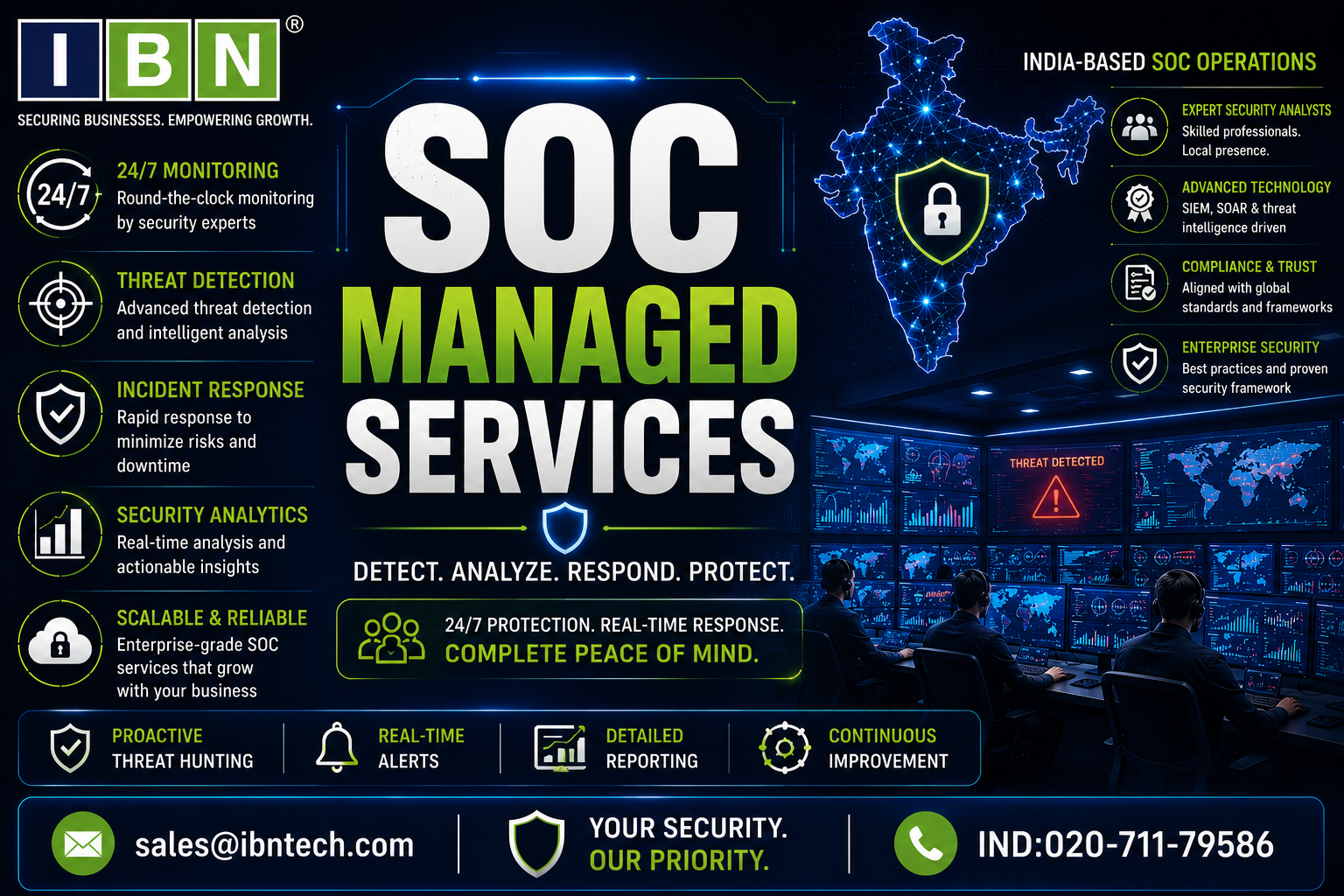
Could a SOC Managed Service Strengthen Security Operations in Indian BFSI?
Financial institutions operate in environments where digital transactions, customer-facing systems, employee accounts, applications, endpoints, and supporting infrastructure generate continuous security activity. For Indian BFSI organisations, maintaining visibility across these environments is an important part of a broader security strategy.
A soc managed service can provide external operational support for security monitoring, alert analysis, threat identification, and escalation. Instead of requiring every SOC function to be developed and maintained internally, organisations can use a managed operating model alongside their existing security teams.
The decision requires careful evaluation. BFSI leaders need to understand what the service covers, how responsibilities are divided, and whether the operating model fits their security and governance requirements.
What Does a SOC Managed Service Mean for BFSI?
A SOC managed service provides security operations support through a combination of security technologies, monitoring processes, and specialised security personnel.
Relevant security events can be collected and reviewed to identify activity that may require investigation. Depending on the agreed service scope, alerts can be analysed and significant findings escalated to designated internal teams.
For BFSI organisations, the objective is to create a repeatable security-monitoring process that can complement internal capabilities and provide greater visibility into security activity.
What Should BFSI Know About SOC as a Service Providers?
When evaluating soc as a service providers, financial organisations should look beyond the terminology used to describe the service.
Different providers may structure their services around different levels of monitoring, analysis, reporting, escalation, and customer involvement.
BFSI decision-makers should therefore clarify the actual operating responsibilities before selecting a service. The organisation needs to understand which activities are performed by the external team and which remain under internal ownership.
The evaluation of soc as a service providers should focus on service scope, monitoring processes, communication, escalation, reporting, and integration with existing security operations.
Why BFSI Security Monitoring Requires a Defined Operating Model
Security events in financial environments can come from multiple technology layers. A login event, endpoint alert, application activity, or infrastructure change may appear insignificant on its own but can become relevant when considered with other events.
Without a defined monitoring process, security teams may spend significant time reviewing individual alerts without sufficient context.
An effective SOC model is therefore not simply about receiving notifications. It requires processes for reviewing activity, determining relevance, investigating suspicious events, and communicating findings.
For BFSI organisations, these processes should also align with established security governance and incident-management responsibilities.
Managed SOC or Internal SOC: What Should BFSI Consider?
BFSI organisations can structure security operations in different ways. Some may operate extensive internal capabilities, while others may use external support for selected monitoring functions.
A comparison should consider operational requirements rather than treating one model as universally appropriate.
|
Evaluation Factor |
Internal SOC |
Managed SOC |
|
Monitoring responsibility |
Primarily internal |
Supported by external security operations |
|
Staffing |
Internal security resources required |
External resources supplement internal teams |
|
Alert analysis |
Performed internally |
Performed according to the managed service scope |
|
Escalation |
Internal workflow |
Shared workflow based on agreed responsibilities |
|
Operational control |
Direct internal management |
Requires defined provider coordination |
|
Scalability |
Depends on internal resources |
Can provide additional operational capacity |
|
Governance |
Directly managed internally |
Requires clear oversight and accountability |
The appropriate structure depends on the organisation's existing capabilities, security requirements, technology environment, and governance model.
How to Assess a SOC Managed Service Before Engagement
Selecting a managed service should begin with an assessment of current security operations.
BFSI organisations can document their existing monitoring environment and identify where operational gaps exist.
Important questions include:
- Which systems require security monitoring?
- What events need regular analysis?
- How are alerts currently investigated?
- Which events require escalation?
- Who owns incident decisions?
- What information should reach security leadership?
- What reporting is required?
- Which responsibilities should remain internal?
- How will changes to the technology environment affect monitoring?
This creates a clear basis for evaluating whether a managed service addresses an actual business requirement.
Can a SOC Managed Service Improve Alert Management?
A soc managed service can create a structured workflow around security alerts. Instead of treating every notification equally, security operations can analyse events according to defined processes and escalate activity that requires further attention.
For BFSI teams, this can help establish clearer separation between routine security activity and events requiring investigation.
However, the effectiveness of the service depends on factors such as monitoring scope, configuration, alert analysis, communication, and the organisation's own response processes.
A managed SOC should therefore be viewed as part of the security operating model rather than as a replacement for internal security governance.
BFSI Scenario: Monitoring a Digital Financial Environment
Consider a financial organisation operating customer applications alongside internal business systems and supporting infrastructure.
Security events may be generated by user authentication, application activity, endpoint systems, and network infrastructure. An internal security team may need to investigate these events while simultaneously managing other security responsibilities.
A managed SOC can provide an operational monitoring layer that reviews relevant events and identifies activity requiring further investigation.
When an event reaches the escalation stage, the agreed process can bring the appropriate internal team into the investigation or response.
This creates a clearer relationship between monitoring and internal decision-making.
Practical Selection Checklist for BFSI Organisations
Before entering into a managed SOC arrangement, security leaders should review:
- Monitoring scope and covered environments
- Alert analysis methodology
- Investigation responsibilities
- Escalation thresholds and contacts
- Communication procedures
- Reporting requirements
- Internal versus provider responsibilities
- Security information access controls
- Processes for changes to monitored systems
- Alignment with existing incident-management procedures
A detailed review can help prevent misunderstandings about what the service is expected to deliver.
Governance and Compliance Considerations
BFSI organisations operate within a highly governed environment. Security monitoring should therefore be considered alongside applicable regulatory requirements, information-security policies, audit expectations, contractual obligations, and data-protection responsibilities.
A SOC managed service does not itself guarantee regulatory compliance. Instead, monitoring and security-event analysis can contribute to the organisation's broader security-control framework.
Internal governance should define who has authority to make security decisions, how incidents are handled, how relevant information is documented, and how external service providers are overseen.
What a Sustainable SOC Model Looks Like
A sustainable security operations model depends on more than technology or staffing. It requires clearly defined processes, appropriate monitoring coverage, effective communication, documented responsibilities, and regular review.
For BFSI organisations, the decision to use managed SOC support should be based on operational requirements and security objectives. Internal teams can retain ownership of risk and business decisions while external security operations provide monitoring and analysis within the agreed scope.
Indian financial organisations assessing their security-monitoring strategy can consider a soc managed service when they need a structured way to support continuous monitoring, alert investigation, threat visibility, and coordinated security operations without treating the SOC as an isolated technology function.
Contact Us:
IND- 02067680404
IBN Technologies Ltd.
E-mail: - [email protected]

 English
 Arabic
 French
 Spanish
 Portuguese
 Deutsch
 Turkish
 Dutch
Dutch
 Italiano
 Russian
 Romaian
 Greek
Greek