
The Growing Role of Warehouse Robotics in E-Commerce Distribution Centers
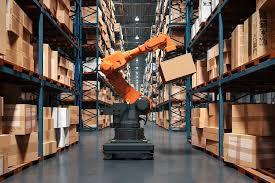
The rapid evolution of e-commerce has fundamentally disrupted traditional warehousing methodologies, forcing logistics providers to completely re-evaluate their operational workflows. Modern supply chains can no longer afford the inefficiencies of manual picking, sorting, and inventory management, as consumers demand faster turnaround times and unprecedented delivery accuracy. Incorporating robotic systems into these facilities serves as a core strategy to mitigate labor shortages, rising operational costs, and the physical limitations of human workers. By deploying automated guided vehicles, autonomous mobile robots, and collaborative robotic arms, distribution hubs are transitioning from passive storage facilities into dynamic, high-throughput fulfillment ecosystems that operate seamlessly around the clock. Navigating this transition requires a detailed Warehouse Robotics Market analysis to understand the financial implications, technological dependencies, and strategic partnerships necessary to achieve sustainable operational excellence.
For group discussions, evaluating the integration of artificial intelligence with mechanical hardware is critical, as it changes the conversation from simple automation to cognitive optimization. Machine learning algorithms allow modern warehouse robots to learn from their environments, recalculate paths in real-time to avoid obstacles, and predict inventory bottlenecks before they stall the floor. This intersection of software intelligence and physical automation is rewriting the rules of asset utilization and workforce deployment across the globe. As organizations debate whether to pursue fully dark warehouses or hybrid collaborative setups, the core decision-making parameters revolve around initial capital expenditure, system scalability, and the retraining of existing personnel. Ultimately, the successful deployment of these automated platforms hinges on an organization’s ability to align its overarching business objectives with the fast-paced software updates and mechanical advancements characterizing the current automation landscape.
How does artificial intelligence enhance the performance of autonomous mobile robots in fulfillment centers?
Artificial intelligence equips autonomous mobile robots with advanced computer vision, simultaneous localization and mapping capabilities, and predictive path planning. This enables them to navigate dynamic warehouse environments safely, adapt to real-time layout changes, and optimize picking routes without requiring rigid infrastructure modifications like floor tape or magnetic tracks.
What are the primary operational challenges when transitioning from a manual warehouse to a robotic ecosystem?
The main challenges include high initial capital investment, complex integration with existing warehouse management software, potential operational downtime during deployment, and the necessity of upskilling the current workforce to manage, maintain, and collaborate with new robotic systems.
➤➤➤Explore MRFR’s Related Ongoing Coverage In Semiconductor Industry:
Debt Collection Software Market
AI in Video Surveillance Market
Distributed Acoustic Sensing Market
Flexible Hybrid Electronics Market

 Arabic
 French
 Spanish
 Portuguese
 Deutsch
 Turkish
 Dutch
 Italiano
 Russian
 Romaian
 Portuguese (Brazil)
 Greek