
Horticulture Lighting Technologies Driving Sustainable Crop Production
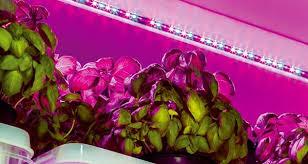
The commercial indoor growing landscape is highly diverse, divided into distinct operational frameworks that each require highly specific technical hardware configurations. Commercial greenhouses primarily use supplemental lighting systems to extend natural daylight hours during winter months, requiring high-intensity fixtures that can throw light across expansive floor areas from high ceilings. Conversely, indoor vertical farms operate in complete absence of natural sunlight, requiring close-proximity multi-layer fixtures that distribute uniform light across shallow shelves without burning delicate leaves. Choosing the correct hardware framework requires balancing crop types, building dimensions, and local utility rates against the exact optical characteristics of the fixtures. For a structured breakdown of these market categories, reviewing the formal Horticulture Lighting Market segment documentation provides absolute clarity regarding historical market shares, application velocities, and component-level growth rates.
Understanding these structural industry divisions allows hardware designers to customize their product portfolios to match the unique operating needs of each distinct grower group. For example, the greenhouse segment demands fixtures with minimal physical profiles to prevent casting shadows on the crops during sunny periods when the lights are turned off. On the other hand, vertical farm operators place a premium on thin, daisy-chained fixtures that simplify electrical wiring across thousands of individual growing racks. By closely monitoring the shifting market sizes of these individual operating frameworks, component suppliers can ensure their manufacturing capacities align with the exact form factors demanded by the fastest-growing sectors of the market.
Frequently Asked Questions
-
Why must greenhouse light fixtures have a minimal physical width and profile? A minimal profile ensures that the fixtures do not block natural sunlight from reaching the crops during the day when the artificial lights are turned off.
-
What does "daisy-chaining" mean, and why is it preferred in vertical farming facilities? Daisy-chaining allows multiple light fixtures to be connected together in a single electrical series, significantly reducing the complexity and cost of wiring thousands of individual racks.
➤➤➤Explore MRFR’s Related Ongoing Coverage In Semiconductor Industry:

 English
 Arabic
 French
 Spanish
 Portuguese
 Deutsch
 Turkish
 Dutch
 Italiano
 Russian
 Portuguese (Brazil)
 Greek