
Cloud-Native Bioinformatics Transforms Genomic Data Analysis Market
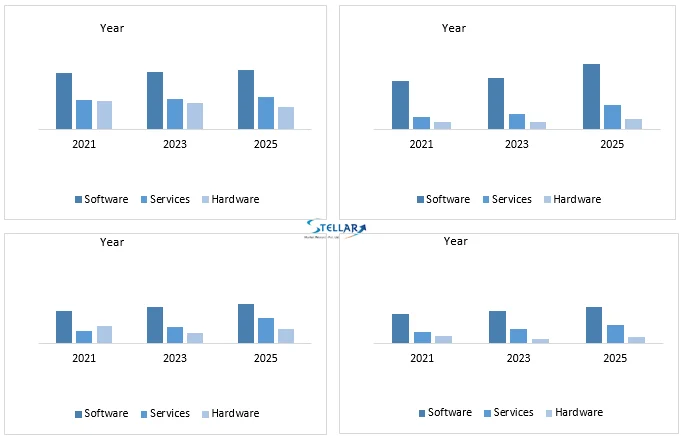
The Genomic Data Analysis Market is entering a decisive inflection point as Stellar Market Research highlights how artificial intelligence, high-throughput sequencing output, and cloud-native pipelines are redefining life sciences economics. Generating raw DNA sequence reads is no longer the primary bottleneck in genomics; interpreting petabytes of multi-omics data into clinically actionable insights now determines competitive advantage for pharmaceutical developers, diagnostic laboratories, and healthcare systems.
Sequencing hardware costs have fallen sharply while clinical and research test volumes continue to climb. That shift creates a structural value transfer toward bioinformatics software, automated variant interpretation, and managed cloud analytics. Hospitals, biopharma R&D teams, and national genome initiatives increasingly need platforms that unify genomic sequences with clinical phenotypes and electronic health records without straining local IT teams.
Key Findings from the Report
-
Market Trajectory: The genomic data analysis market builds on a 2025 baseline toward a projected USD 15.05 billion by 2032, supported by expanding oncology profiling, rare disease diagnostics, and population genomics programs.
-
Dominant Offering: Software platforms lead revenue generation due to recurring enterprise subscriptions for alignment, variant calling, and cloud bioinformatics suites.
-
Fastest-Growing Segment: Annotation, curation, and managed bioinformatics services represent the fastest-growing pocket as clinical labs outsource complex variant interpretation and model validation.
-
Technology Backbone: Next-generation sequencing (NGS) data processing anchors demand, accounting for roughly 36.35% of technology share in recent benchmarks and scaling alongside multi-omics integration.
-
Leading Application & End User: Drug discovery and development—alongside precision medicine—drives major application demand, while pharmaceutical and biotechnology firms represent the largest end-user buyer group (around 40% share).
-
Regional Leadership & Growth: North America leads global revenue (42.1% share in 2025), while Asia-Pacific posts the fastest growth trajectory through 2032.
-
Investor Focus: Venture capital and strategic acquirers increasingly target AI-native interpretation engines, companion diagnostic analytics, and sovereign cloud genomics infrastructure.
For further information, click the following link:https://www.stellarmr.com/report/genomic-data-analysis-market/2908
Market Drivers and Restraints
Key Drivers
-
Precision Oncology and Targeted Therapies: Rising demand for biomarker discovery, tumor profiling, and patient stratification compels biopharma companies and clinical labs to adopt high-throughput genomic analytics.
-
Falling Sequencing Costs and High Data Volume: Ultra-high-throughput sequencers produce massive sequence datasets across clinical and population cohorts, increasing downstream demand for automated pipelines and storage compression.
-
National Genome Initiatives and Biobanks: Multi-year public health and population sequencing programs across North America, Europe, and Asia-Pacific sustain multi-year institutional budgets for standardized analysis infrastructure.
Key Restraints
-
Data Storage, Security, and Interoperability Costs: Storing, encrypting, and querying petabyte-scale genomic datasets alongside clinical records raises capital and compliance expenses for mid-sized labs.
-
Bioinformatics Talent Scarcity: Shortages of experienced computational biologists, clinical geneticists, and data engineers slow custom pipeline deployment and internal validation.
Technology, Regulation, and Sustainability Trends
Deep learning and foundation models are automating variant prioritization, structural variant detection, and literature curation, shortening turnaround times from raw reads to clinical reports. At the same time, strict privacy rules—including GDPR, HIPAA updates, and national data localization laws—require zero-trust security, role-based access controls, and auditable clinical software compliance.
Sustainability is also shaping infrastructure choices as institutions migrate power-intensive on-premise server clusters to optimized cloud compute regions to reduce energy overhead and match compute capacity to workload spikes.
Regional Insights
North America maintains market leadership on the back of advanced clinical genomics adoption, dense biopharma R&D activity, and strong institutional funding led by the United States. Europe advances through cross-border genomic research networks and strict data-governance standards that favor compliant enterprise platforms.
Asia-Pacific is emerging as the fastest-growing region. Government-backed genomic programs, expanding clinical laboratory chains, and rising healthcare IT investments across China, India, and Japan are accelerating regional adoption of scalable sequencing analytics.
Recent Industry Developments
-
QIAGEN (2025): Acquired AI clinical genomics software provider Genoox for USD 70 million to integrate the Franklin interpretation platform into QIAGEN Digital Insights and expand global NGS variant analysis workflows.
-
Roche (2025): Launched proprietary Sequencing by Expansion (SBX) technology aimed at delivering faster, scalable sequencing output for clinical research, translational medicine, and precision genomics workflows.
-
Illumina (2026): Completed a USD 350 million cash acquisition of SomaLogic (plus potential milestones and royalties) to broaden proteomic and multi-omics capabilities alongside sequencing and informatics offerings.
-
Illumina (2026): Released DRAGEN v4.6 with DRAGEN Software mode and expanded distributed whole-genome sequencing workflows for molecular residual disease research on NovaSeq X systems.
-
Japan Ministry of Health, Labour and Welfare (2026): Continued expert committee deliberations on national whole-genome analysis alongside AMED research initiatives, reinforcing institutional support for genomic medicine infrastructure.
Competitive Landscape
Leading competitors—including Illumina, Thermo Fisher Scientific, QIAGEN, Roche, and specialized bioinformatics and cloud platforms—are competing through end-to-end workflow integration. Rather than selling isolated analysis tools alone, vendors are bundling sequencing consumables, accelerated secondary pipelines, AI-assisted variant interpretation, and compliant cloud environments to lock in clinical and pharmaceutical accounts. Strategic acquisitions and partnerships with diagnostic labs and academic consortia remain central to expanding commercial reach.
Analyst Commentary
"The center of gravity in genomic data analysis has shifted from raw sequence generation to automated clinical interpretation and cross-institutional data governance," said a Senior Research Analyst at Stellar Market Research. "Organizations that pair validated AI variant workflows with compliant cloud architectures will capture the strongest operating leverage as routine testing scales."
Future Outlook
Through 2032, demand for genomic data analysis will expand alongside broader adoption of precision oncology, rare disease diagnostics, and multi-omics research. Investment will concentrate on AI-assisted interpretation, federated and privacy-preserving data access, and standardized clinical reporting. As regulatory scrutiny and compute demands rise, competition will favor integrated platforms that lower turnaround times while meeting strict data-security and sovereignty requirements.
For further information, click the following link:https://www.stellarmr.com/report/genomic-data-analysis-market/2908
About Stellar Market Research
Stellar Market Research is a multifaceted market research and consulting company with professionals from several industries. Some of the industries we cover include medical devices, pharmaceutical manufacturers, science and engineering, electronic components, industrial equipment, technology and communication, cars and automobiles, chemical products and substances, general merchandise, beverages, personal care, and automated systems. To mention a few, we provide market-verified industry estimations, technical trend analysis, crucial market research, strategic advice, competition analysis, production and demand analysis, and client impact studies.
Address
Phase 3, Navale IT Zone, S.No. 51/2A/2, Office No. 202, 2nd floor, Near, Navale Brg, Narhe, Pune, Maharashtra 411041
Email
[email protected]
Mobile
+91 9607365656

 English
 Arabic
 French
 Spanish
 Portuguese
 Deutsch
 Turkish
 Dutch
 Italiano
 Russian
 Portuguese (Brazil)
 Greek