
Digital Video Recorder Market Analysis: Deconstructing Forces Shaping Video Technology Evolution
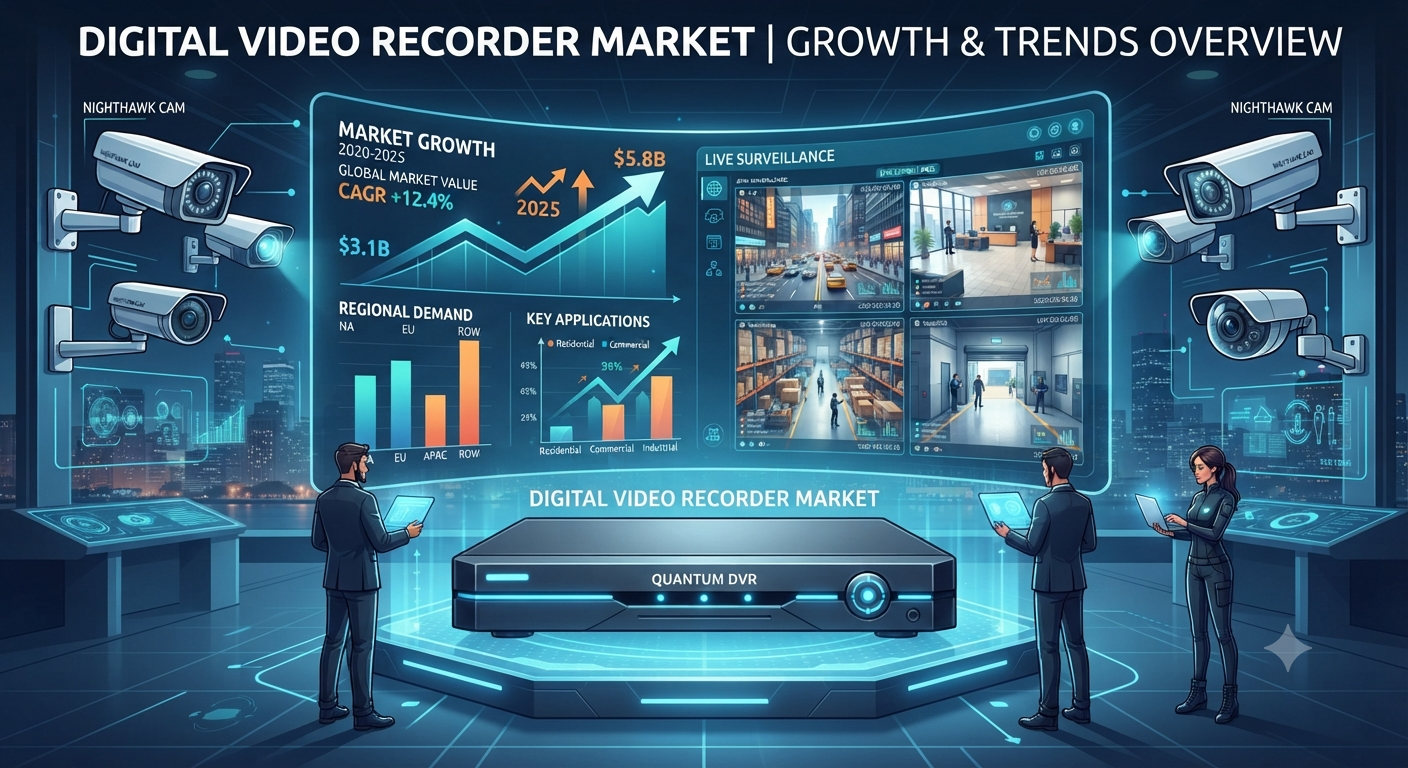
Rigorous Digital Video Recorder Market Analysis requires examination of the multiple forces—technological, consumer behavioral, regulatory, and competitive—that collectively determine the industry's trajectory and the distribution of value across its diverse segments and applications. This analytical perspective must account for both the supply-side dynamics of manufacturing and product innovation and the demand-side factors of consumer preferences, security requirements, and organizational procurement patterns. The interplay between these forces creates a complex system where changes in one area ripple across others, producing outcomes that are difficult to predict through simple extrapolation. Effective analysis identifies the underlying drivers of change, assesses their relative importance and interaction effects, and develops scenarios that help stakeholders prepare for alternative futures. The digital video recorder market's evolution reflects broader trends in video technology, including the shift from analog to digital systems and the increasing integration of artificial intelligence and cloud services.
Consumer Behavior Shifts Reshape Demand Patterns
Consumer behavior shifts have fundamentally reshaped demand patterns within the digital video recorder market, as viewing habits evolve in response to streaming proliferation, time-shifting expectations, and the desire for personalized content experiences. The traditional model of scheduled broadcast viewing has given way to on-demand consumption, where viewers expect to watch content when, where, and how they choose. Digital video recorders have evolved from simple time-shifting devices into central hubs that aggregate live television, streaming services, and personal recordings into unified interfaces. The ability to skip commercials, pause live television, and record entire series has become expected functionality rather than premium features. Consumers increasingly seek devices that integrate seamlessly with their preferred streaming platforms and offer intuitive navigation across diverse content sources. Voice control and mobile access have emerged as important features that enhance convenience. These behavioral shifts create opportunities for manufacturers that can deliver products aligned with modern viewing habits.
Professional Requirements Drive Technology Innovation
Professional requirements from security, surveillance, and monitoring applications have driven significant technology innovation within the digital video recorder market, as organizations demand capabilities that exceed consumer expectations for reliability, resolution, and analytics. Network video recorders supporting internet protocol cameras have become the standard for professional installations, offering scalability, advanced compression, and integration with security management platforms. Artificial intelligence and machine learning enable features such as person detection, object recognition, and behavioral analytics that transform passive recording into active monitoring. The ability to search recorded footage based on specific criteria—such as color, object type, or movement patterns—dramatically improves investigative efficiency. Integration with access control, alarm systems, and broader security infrastructure enables comprehensive protection. These professional requirements drive innovation that eventually benefits consumer products, as technologies developed for enterprise applications become more affordable and accessible over time.
Competitive Dynamics Determine Value Capture
Competitive dynamics within the digital video recorder market determine how value is created, distributed, and captured across the industry value chain, shaping manufacturer strategies and buyer options. The market features a mix of established consumer electronics brands with strong retail presence, specialized security manufacturers with deep expertise in surveillance applications, and emerging technology providers focused on cloud services and analytics. Consumer brands compete on features, brand recognition, and retail distribution, while security specialists compete on reliability, integration, and professional support. Price competition is intense, particularly in commodity segments where products from different manufacturers offer similar capabilities. Differentiation increasingly depends on software, analytics, and service capabilities rather than hardware specifications alone. Cloud storage subscriptions and premium features create recurring revenue opportunities that improve unit economics. This competitive dynamic favors manufacturers that can combine reliable hardware with valuable software and services while maintaining cost competitiveness.
Regulatory Environment Shapes Market Access
The regulatory environment significantly shapes market access and product requirements within the digital video recorder market, as governments impose standards for security, privacy, and interoperability that affect product design and market entry. Privacy regulations governing video surveillance—including requirements for consent, data retention limits, and access controls—influence how recording systems are designed and deployed. Cybersecurity regulations increasingly mandate security features for connected devices, including requirements for secure updates, credential management, and vulnerability disclosure. Broadcast regulations affect the design of consumer recording devices, including requirements for copy protection and content management. Import regulations and trade policies can affect market access and pricing for products manufactured in different regions. Compliance with these diverse regulatory requirements requires dedicated legal and technical resources, favoring larger manufacturers with established compliance capabilities while creating barriers for smaller entrants.
Technology Evolution Creates New Opportunities
Technology evolution creates new opportunities within the digital video recorder market, as innovation in storage, connectivity, and analytics enables capabilities that were previously impractical or uneconomical. Cloud storage eliminates the capacity constraints of physical hard drives, enabling users to retain footage for extended periods without investing in additional hardware. Artificial intelligence enables intelligent search and alerting, transforming passive archives into active monitoring systems. Edge computing enables real-time analytics at the camera or recorder level, reducing bandwidth requirements and improving response times. High-efficiency video coding reduces storage and bandwidth requirements, enabling higher resolution recording at lower cost. These technological developments create opportunities for manufacturers that can incorporate new capabilities into their products while maintaining ease of use and reasonable pricing. Companies that invest in research and development and bring innovations to market quickly are positioned to capture value as the industry continues to evolve.
➤ Related Reports by Market Research Future:

 English
 Arabic
 French
 Spanish
 Portuguese
 Deutsch
 Turkish
 Dutch
 Italiano
 Russian
 Portuguese (Brazil)
 Greek