
How AI, 5G, and Advanced Semiconductor Technologies Are Transforming High-Speed Data Converters
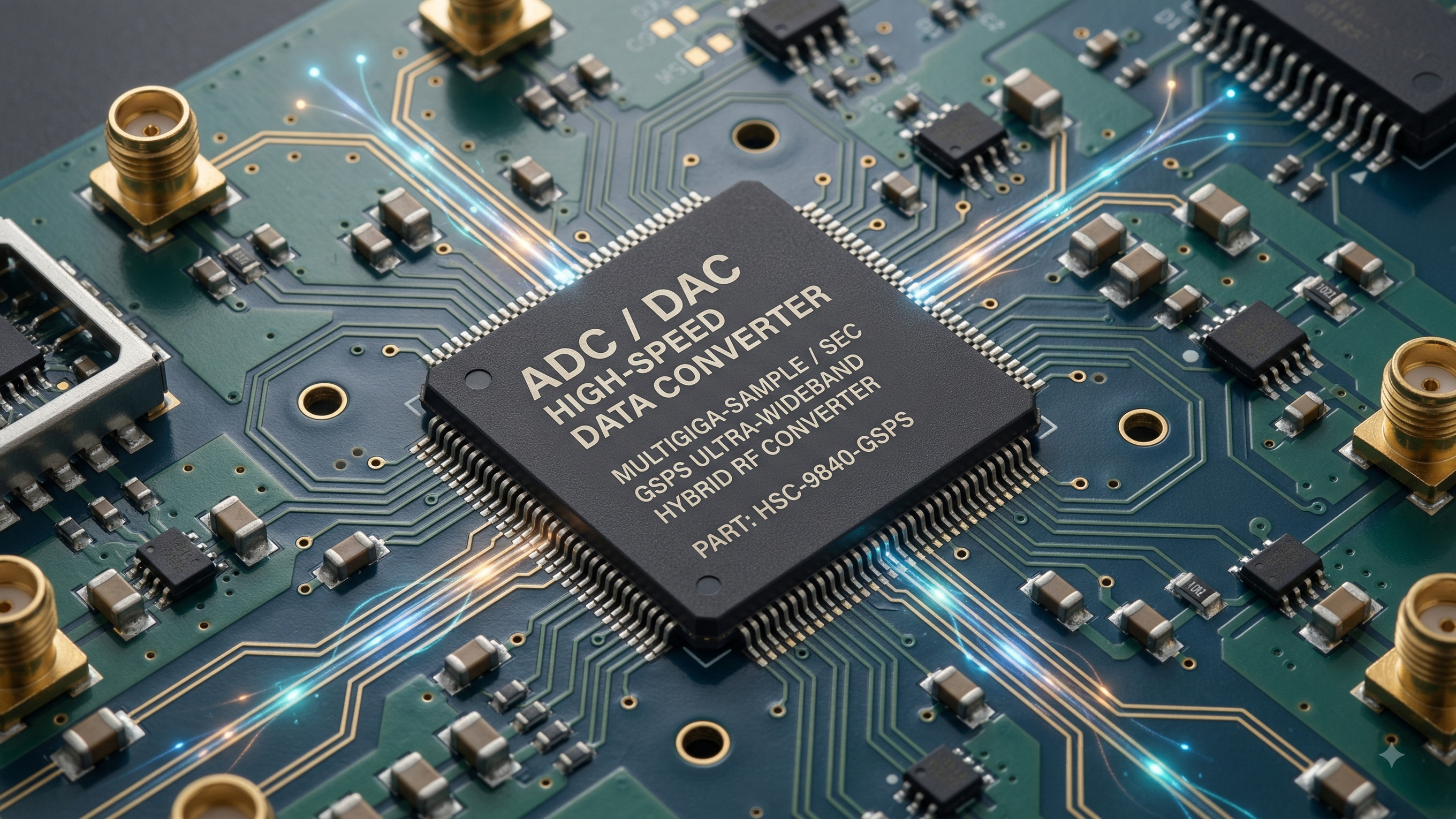
The growing demand for faster data processing, high-bandwidth communication, and real-time signal acquisition is transforming the semiconductor industry.High-speed data converters are becoming essential components in modern electronic systems, enabling efficient communication between the analog and digital worlds. Increasing adoption of artificial intelligence (AI), cloud computing, 5G infrastructure, advanced radar systems, and industrial automation is creating new opportunities for high-performance analog-to-digital converters (ADCs) and digital-to-analog converters (DACs).
High-speed data converters play a critical role in capturing, processing, and transmitting signals with greater accuracy and speed. As electronic systems become more sophisticated, manufacturers are focusing on improving sampling rates, resolution, power efficiency, and signal integrity.
Growing Demand for High-Speed Data Converters in AI Data Centers
The rapid expansion of AI infrastructure is creating significant demand for high-speed data conversion technologies. Modern AI data centers require advanced electronic components to monitor power systems, process high-frequency signals, and maintain reliable communication between interconnected hardware.
High-speed ADCs help convert analog signals into digital information for real-time monitoring and analysis. These capabilities are particularly important for identifying electrical fluctuations, monitoring system performance, and improving operational reliability.
Recent developments highlight this growing demand. In October 2026, Texas Instruments introduced its ADC34DSO75, a 3 GSPS analog-to-digital converter designed to support continuous remote monitoring at nanosecond resolution. The technology helps data center operators identify power-related issues that could affect infrastructure performance.
As AI workloads increase, demand for compact, energy-efficient, and high-performance data converters is expected to strengthen across data center infrastructure.
5G Advanced and 6G Networks Accelerate Converter Innovation
The evolution of wireless communication technologies is another important factor influencing high-speed data converter development. 5G Advanced and emerging 6G networks require higher bandwidth, lower latency, and improved signal-processing capabilities.
ADCs and DACs enable wireless communication equipment to convert radio-frequency signals into digital data and reconstruct digital information into analog signals for transmission. These components are essential in massive MIMO systems, remote radio units, base stations, and advanced wireless infrastructure.
Direct RF sampling is gaining attention because it can reduce the need for multiple analog conversion stages. This approach helps simplify system architectures, reduce component requirements, and support wider operating bandwidths.
Semiconductor companies are increasingly developing integrated converter technologies that deliver higher sampling rates while maintaining power efficiency. These advancements are expected to support future wireless networks and high-frequency communication applications.
Download PDF brochure -https://www.marketsandmarkets.com/pdfdownloadNew.asp?id=191364408
Advanced Semiconductor Technologies Improve Conversion Performance
Semiconductor manufacturing innovations are helping manufacturers overcome traditional limitations associated with high-speed data conversion. Advanced process technologies, including FinFET architectures, improved circuit designs, and integrated signal-processing capabilities, are supporting smaller and more efficient converter solutions.
In February 2026, imec introduced a 7-bit, 175 GS/s ADC developed using 5 nm FinFET technology. The device combines extremely high sampling speed with a compact core area and low conversion energy, targeting next-generation wireline and optical communication applications.
Such developments demonstrate how semiconductor innovation is improving the performance of high-speed converters. Manufacturers are increasingly prioritizing smaller footprints, reduced energy consumption, and improved signal accuracy to address the requirements of advanced electronic systems.
Integration of Digital Signal Processing Reduces System Complexity
Integration of digital signal processing directly into data converters is emerging as an important technology trend. Traditional converter architectures often require external FPGAs or dedicated processing components to perform additional signal conditioning and correction.
However, integrated DSP capabilities can simplify hardware architectures and reduce the number of external components required.
In November 2026, Silanna expanded its Plural Nano ADC family with integrated DSP functionality. The technology supports functions such as decimation, digital down-conversion, interleaving, and I/Q mismatch correction.
This development highlights the growing importance of highly integrated data converters. Reduced board space, lower system complexity, and improved processing efficiency are becoming important selection criteria across industrial, medical, communication, and defense applications.
Increasing Applications Across Automotive, Aerospace, and Industrial Automation
High-speed data converters are finding applications across several industries that depend on accurate and rapid signal processing.
In the automotive industry, advanced driver-assistance systems, radar technologies, and vehicle sensing applications require reliable signal acquisition and processing. High-speed converters support the electronic systems responsible for interpreting sensor information and enabling real-time vehicle responses.
In aerospace and defense, ADCs and DACs are essential for radar systems, satellite communications, electronic warfare, and advanced instrumentation. These applications require high sampling speeds, precision, and reliable performance under demanding operating conditions.
Industrial automation is another important application area. High-speed converters support monitoring equipment, machine vision systems, industrial measurement devices, and automated production environments. Their ability to process signals accurately helps improve equipment monitoring and operational efficiency.
Medical imaging systems also benefit from high-performance data conversion technologies, particularly in applications requiring rapid acquisition and accurate processing of complex signals.
High-speed Data Converter Market Outlook and Emerging Opportunities
The high-speed data converter industry is positioned for continued growth as demand for advanced semiconductor components increases. According to an October 2026 market outlook published by OMR Global, the global high-speed data converter market is projected to increase from USD 3.5 billion in 2025 to USD 6.3 billion by 2035, registering a CAGR of 6.0% during the forecast period.
Several factors are expected to support this expansion, including increasing investments in AI infrastructure, the development of 5G Advanced and 6G networks, growing adoption of advanced radar technologies, and rising demand for high-speed industrial electronics.
However, manufacturers must address challenges related to power consumption, thermal management, manufacturing complexity, sampling accuracy, and signal interference. Balancing conversion speed with resolution and energy efficiency will remain important for future product development.
Conclusion
High-speed data converters are becoming fundamental building blocks of next-generation electronic systems. Innovations in ADC and DAC architectures, advanced semiconductor manufacturing, integrated DSP, and ultra-high-speed sampling are expanding their capabilities across communication, AI infrastructure, automotive, aerospace, and industrial applications.
As industries continue investing in faster and more intelligent electronic systems, demand for compact, energy-efficient, and high-performance data conversion technologies is expected to increase. Companies developing advanced converter solutions will play an important role in supporting the next generation of connected and data-intensive technologies.

 English
 Arabic
 French
 Spanish
 Deutsch
 Turkish
 Dutch
 Italiano
 Russian
 Romaian
 Portuguese (Brazil)
 Greek