
Anti-Acne Cosmetics Drive Skincare Innovation Amid Rising Consumer Demand for Targeted Acne Treatments
"
According to the latest report published by Data Bridge Market Research, the Anti-Acne Cosmetics Market
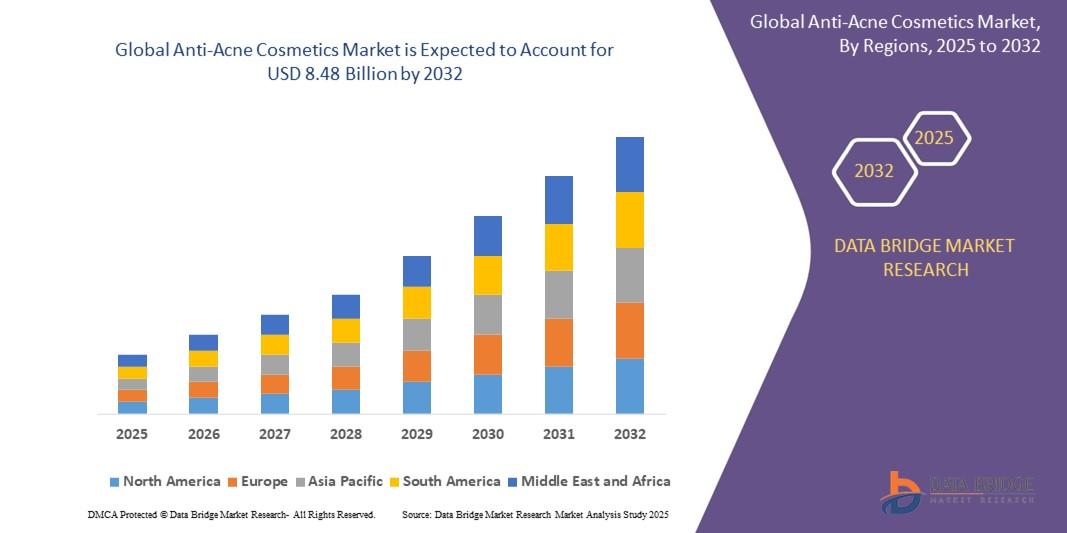
- The global anti-acne cosmetics market size was valued at USD 4.27 billion in 2024 and is expected to reach USD 8.48 billion by 2032, at a CAGR of 8.96% during the forecast period
Anti-Acne Cosmetics Market report has been framed by chewing over an array of market parameters. These factors include but are not limited to latest trends, market segmentation, new market entry, industry forecasting, future directions, opportunity identification, strategic analysis and planning, target market analysis, insights and innovation. For market segmentation research and study carried out in the winning Anti-Acne Cosmetics Market report, a market of potential customers is classified into groups or segments based on different characteristics such as application of product, deployment model, end user and geographical region etc.
Stay informed with our latest keyword market research covering strategies, innovations, and forecasts. Download full report: https://www.databridgemarketresearch.com/reports/global-anti-acne-cosmetics-market
Anti-Acne Cosmetics Market Segmentation and Market Companies
Segments
- Product Type: The global anti-acne cosmetics market can be segmented based on product type into cleansers, toners, masks, creams, and others. Cleansers are expected to hold a significant market share due to their ability to remove excess oil and impurities from the skin, preventing acne breakouts.
- Demographics: In terms of demographics, the market can be segmented into age groups such as teenagers, young adults, and adults. Teenagers are a major consumer group for anti-acne cosmetics due to hormonal changes that often lead to acne breakouts.
- Distribution Channel: The distribution channels for anti-acne cosmetics include supermarkets/hypermarkets, specialty stores, online retail, and others. Online retail is gaining popularity due to the convenience and variety it offers to consumers.
- Region: Geographically, the market can be segmented into North America, Europe, Asia-Pacific, Latin America, and Middle East & Africa. North America is expected to dominate the market due to a higher awareness of skincare products and a large target consumer base.
Market Players
- Johnson & Johnson Services, Inc.: A leading player in the global anti-acne cosmetics market, Johnson & Johnson offers a wide range of skincare products targeting acne-prone skin.
- The Procter & Gamble Company: Procter & Gamble's skincare brands like Olay and Clearasil are prominent players in the anti-acne cosmetics market, offering effective solutions for acne treatment.
- Unilever: Unilever's brands such as Vaseline and Dove also have a presence in the anti-acne cosmetics market with products focusing on gentle yet effective acne treatment.
- L'Oréal S.A.: L'Oréal's skincare brands like La Roche-Posay and Garnier offer specialized anti-acne products catering to different skin types and concerns.
- Estée Lauder Companies Inc.: Estée Lauder's brands like Clinique and Origins provide skincare solutions for acne-prone skin, emphasizing the use of natural ingredients and advanced technology.
The global anti-acne cosmetics market is expected to witness significant growth in the coming years, driven by a growing emphasis on skincare and beauty routines, especially among the younger population. Increasing disposable income, changing lifestyle patterns, and a rising prevalence of skin issues like acne are also contributing to the market's expansion. Innovative product formulations, increased marketing efforts, and a focus on natural and organic ingredients are further boosting the demand for anti-acne cosmetics worldwide.
The global anti-acne cosmetics market is poised for continued growth and evolution, driven by a combination of factors shaping consumer behavior and industry trends. One key area that is expected to play a significant role in the market's development is the increasing focus on sustainability and eco-consciousness among consumers. As more individuals become aware of the environmental impact of their purchasing decisions, there is a growing demand for anti-acne cosmetics that are not only effective but also produced using environmentally friendly practices and ingredients. This shift towards sustainability is pushing cosmetic companies to innovate and incorporate more natural, organic, and cruelty-free ingredients into their anti-acne product lines.
Furthermore, the rise of social media influencers and online beauty communities is also influencing the dynamics of the anti-acne cosmetics market. Consumers today are more informed and connected than ever before, relying on peer reviews, expert recommendations, and user-generated content to make purchasing decisions. This digital landscape presents both opportunities and challenges for market players, as they navigate the complexities of building brand loyalty, engaging with consumers on various platforms, and adapting their marketing strategies to cater to the preferences of the digital-savvy audience.
Another important trend shaping the market is the convergence of skincare and technology. Advances in beauty tech, such as AI-powered skin analysis tools, personalized skincare algorithms, and virtual try-on experiences, are revolutionizing the way consumers discover, purchase, and use anti-acne cosmetics. By leveraging technology, companies can offer personalized solutions, enhance the overall shopping experience, and build stronger relationships with their customers.
Moreover, the COVID-19 pandemic has had a profound impact on the beauty industry, including the anti-acne cosmetics market. The increased emphasis on hygiene and self-care practices during the pandemic has led to a surge in demand for skincare products, including anti-acne treatments. As consumers continue to prioritize health and wellness, companies are adapting their product offerings and marketing strategies to address the evolving needs of the market.
In conclusion, the global anti-acne cosmetics market is experiencing a period of transformation characterized by changing consumer preferences, technological advancements, and market dynamics. To succeed in this competitive landscape, market players must stay attuned to these trends, embrace innovation, and demonstrate agility in responding to shifting market demands. By understanding and harnessing these market forces, companies can position themselves for growth and success in the dynamic world of anti-acne cosmetics.The global anti-acne cosmetics market is a lucrative industry that continues to witness steady growth and evolution driven by various factors. One key trend shaping the market is the increasing focus on sustainability and eco-consciousness among consumers. As more individuals become environmentally aware, there is a rising demand for anti-acne cosmetics produced using sustainable practices and natural ingredients. Cosmetic companies are therefore innovating to meet this demand by incorporating more organic and cruelty-free components into their product lines. This shift towards sustainability not only reflects changing consumer values but also presents an opportunity for market players to differentiate themselves and attract environmentally conscious consumers.
Moreover, the influence of social media influencers and online beauty communities is playing a significant role in shaping consumer behavior within the anti-acne cosmetics market. Consumers today heavily rely on peer reviews, expert recommendations, and user-generated content when making purchasing decisions. This trend underscores the importance of engaging with consumers across various digital platforms, building brand loyalty, and adapting marketing strategies to cater to the preferences of the digital-savvy audience. Market players need to leverage social media and online channels effectively to connect with consumers, drive brand awareness, and ultimately increase sales in this competitive landscape.
Furthermore, the convergence of skincare and technology is revolutionizing the way consumers interact with anti-acne cosmetics. Advancements in beauty tech, such as AI-powered skin analysis tools and personalized skincare algorithms, are enabling companies to offer tailored solutions to individuals based on their skin type and concerns. Virtual try-on experiences and interactive platforms are enhancing the overall shopping experience for consumers, allowing them to make more informed decisions when selecting anti-acne products. By embracing technology and incorporating digital solutions into their offerings, market players can stay ahead of the curve and meet the evolving needs of tech-savvy consumers.
Lastly, the impact of the COVID-19 pandemic on the anti-acne cosmetics market cannot be overlooked. The pandemic has led to a heightened focus on hygiene and self-care practices, driving an increased demand for skincare products, including anti-acne treatments. As consumers continue to prioritize health and wellness, companies have pivoted their product offerings and marketing strategies to address these changing consumer needs. Adapting to the new market landscape post-pandemic will be crucial for market players to maintain their competitive edge and capitalize on emerging opportunities in the global anti-acne cosmetics market.
Frequently Asked Questions About This Report
What is the investment feasibility of the Anti-Acne Cosmetics Market?
What is the impact of Factory Automation on Anti-Acne Cosmetics Market labor costs?
What are the recent mergers and acquisitions in the Anti-Acne Cosmetics Market?
What are the major challenges the Anti-Acne Cosmetics Market currently faces?
What is the serviceable obtainable market (SOM) for Anti-Acne Cosmetics Market players?
How do IP (Intellectual Property) rights protect Anti-Acne Cosmetics Market innovations?
What is the impact of Energy Crisis on the Anti-Acne Cosmetics Market?
What does the value chain for the Anti-Acne Cosmetics Market look like?
What is the projected market size of the Anti-Acne Cosmetics Market in 2025?
How can players leverage [Specific Trend] in the Anti-Acne Cosmetics Market?
Which companies are leading in Anti-Acne Cosmetics Market R&D investments?
Browse More Reports:
Global Mining Tailings Management Market
Global Moisturizing Cream Market
Global Organic Honey Market
Global Recreational Vehicle (RV) Awnings Market
Global Windows and Doors Market
Global Vascular Surgery and Endovascular Procedures Market
Global Skin Graft Market
Global Cloud ERP Market
Global Road Safety Market
Global Teeth Whitening Market
Global Blood Gas Analyzer Market
Global Envelope Paper Market
Global Malaria Treatment Market
Global Rosemary Extract Market
Global Implantable Ports Market
"

 English
 French
 Spanish
 Portuguese
 Deutsch
 Turkish
 Dutch
 Italiano
 Russian
 Romaian
 Portuguese (Brazil)
 Greek