
How Frosted Glass Films Create Privacy Without Sacrificing Natural Light
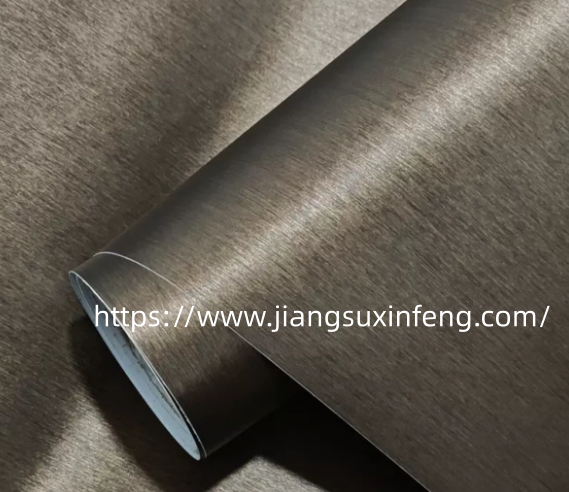
Windows influence how people experience indoor spaces, affecting natural lighting, privacy, and the overall appearance of a room. In modern homes, offices, retail environments, and public buildings, finding a suitable balance between openness and personal privacy has become an important design consideration. A Frosted Window Film offers a flexible way to transform transparent glass into a softer translucent surface, allowing daylight to enter while reducing direct visibility. Its material composition, surface treatment, and decorative flexibility make it a practical option for different architectural and interior applications.
The material composition of window films plays an important role in determining their appearance and everyday usability. PVC is commonly used in decorative film manufacturing because it offers flexibility and can be processed into different surface finishes. Its adaptability allows manufacturers to develop films with various visual effects, making it suitable for glass decoration and other interior applications.
The quality of the base film influences how evenly the material can be applied to glass surfaces. A suitable formulation should provide consistent flexibility and support a uniform appearance. Adhesive materials are also important because they help the film remain attached to the glass. Their compatibility with the substrate influences application convenience and the finished result.
Surface treatment is another important aspect of manufacturing. Frosted effects can be created through different processing techniques that modify how light passes through the film. Rather than allowing a clear view through the glass, the treated surface diffuses incoming light and creates a translucent appearance. The result is a softer visual effect that can improve privacy without making a room feel completely enclosed.
When selecting decorative window film, buyers should first consider where it will be installed. Residential bathrooms, office meeting rooms, storefronts, and interior glass partitions have different privacy requirements. A film suitable for a private residential space may not provide the same visual effect required in a commercial reception area.
The degree of translucency is another purchasing consideration. Some projects require a subtle frosted appearance that maintains a sense of openness, while others need stronger visual screening. Buyers should review samples before making a decision, especially when the film will cover large glass surfaces.
Application compatibility should also be evaluated. Glass surfaces may differ in cleanliness, coating, texture, and condition. These characteristics can influence adhesion and the final appearance. Buyers should confirm whether the selected film is appropriate for the intended glass surface and understand the recommended installation process.
Maintenance requirements are equally relevant. Window films are exposed to fingerprints, dust, cleaning products, and regular contact. Choosing a material that suits the expected cleaning routine can make long-term maintenance easier. Reliable supplier guidance is useful when customers need information about installation, surface care, and replacement options.
The functional value of frosted films comes from their ability to change how light and visibility interact with glass. Their translucent surface scatters incoming light, reducing direct visual clarity while allowing an indoor space to remain naturally illuminated. This makes them useful in areas where privacy is important but completely blocking the window is undesirable.
Different manufacturing techniques can produce different levels of surface diffusion. Some films create a relatively uniform frosted appearance, while others incorporate decorative patterns or textured effects. These variations allow designers to select a finish that complements the purpose and visual character of a space.
Adhesive technology also contributes to product functionality. A well-developed adhesive layer should support stable attachment while allowing the film to be applied smoothly. During installation, proper surface preparation is important because dust, moisture, and contamination can affect the finished result.
For larger commercial projects, consistency between film batches is another important consideration. Uniform color, texture, and surface appearance help maintain a coordinated design across multiple windows and glass partitions. Manufacturers therefore need to pay attention to raw material preparation and production quality throughout the manufacturing process.
From the user's perspective, one of the main advantages of frosted films is their ability to improve privacy without requiring major changes to existing glass structures. Compared with replacing transparent glass with permanently frosted alternatives, applying decorative film can offer greater flexibility for interior renovation and design updates.
Installation convenience also influences the overall experience. A properly prepared glass surface and a suitable application method help reduce visible bubbles, wrinkles, and uneven edges. Professional installation may be particularly helpful for large windows or complex glass arrangements where a consistent finish is important.
Cleaning and daily maintenance should remain straightforward. Users generally prefer surfaces that can be maintained without complicated procedures. Following the manufacturer's recommendations for cleaning products and methods can help preserve the film's appearance and avoid unnecessary damage.
Frosted finishes also contribute to a more comfortable visual environment. In offices, they can provide separation between meeting areas and shared workspaces. In homes, they can create privacy in bathrooms, entryways, and interior partitions. In retail environments, they can introduce decorative elements while maintaining a connection between different areas.
The appearance of window film offers considerable creative flexibility. Traditional frosted finishes create a clean and understated effect, while patterned designs can introduce additional visual interest. Designers can use these surfaces to complement furniture, wall finishes, flooring, and architectural details.
Neutral frosted effects are particularly suitable for contemporary interiors because they work naturally with different color schemes. They can also soften the appearance of glass partitions without making the surrounding space feel visually heavy. For commercial environments, decorative film can help establish a professional atmosphere while maintaining a consistent interior style.
Jiangsu Xinfeng Star Film Materials Co., Ltd. is engaged in the development and production of PVC film materials for decorative and functional applications. Its experience in PVC film manufacturing is relevant to customers looking for adaptable surface materials for glass decoration, furniture, and interior projects. Buyers, distributors, and design professionals interested in learning more about the company's products and material solutions can visit its official website at https://www.jiangsuxinfeng.com/ for further information.

 English
 Arabic
 French
 Spanish
 Portuguese
 Deutsch
 Turkish
 Dutch
 Russian
 Romaian
 Portuguese (Brazil)
 Greek