
Healthcare Edge Computing Market Demand: Drivers, Segments, and Emerging Requirements
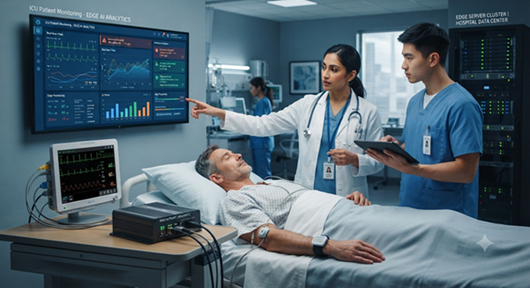
Healthcare Edge Computing Market Demand originates from multiple organizational imperatives that converge on the need for real-time, locally processed clinical intelligence. The demand for real-time data processing represents the most universal driver, affecting healthcare organizations across segments and geographies as they seek immediate insights into patient conditions and operational performance. Telehealth expansion creates demand for edge solutions that support remote consultations and monitoring. AI integration enables clinical decision support at the point of care. These drivers reinforce each other, creating compounding demand across healthcare segments and organizational contexts, positioning edge computing as foundational for modern clinical operations.
Real-Time Processing and the Clinical Imperative
Across healthcare environments, the demand for edge computing is inseparable from the need for real-time data processing. Healthcare providers require immediate insights into patient conditions to make timely interventions that can improve outcomes. Edge computing enables this immediacy by processing data at the point of care, eliminating the latency inherent in cloud-based architectures. The demand driven by real-time processing is particularly durable because it persists regardless of economic conditions; healthcare organizations cannot retreat from real-time capabilities once they have experienced their benefits, and clinical expectations continue to rise.
Telehealth and the Remote Care Demand
The demand for edge computing from telehealth initiatives has intensified as healthcare organizations seek to extend care beyond traditional clinical settings. Telehealth requires reliable, low-latency connectivity that edge computing provides, enabling high-quality video consultations and remote patient monitoring. This demand originates from both patient-facing and operational functions, creating broad organizational support for edge investments. As telehealth continues to gain traction, the demand for edge-enabled capabilities is expected to grow.
Data Management and the Volume Demand
The demand for enhanced data management solutions has intensified as healthcare organizations confront exponential growth in data volumes. Electronic health records, medical imaging, connected devices, and genomic data all contribute to data growth that challenges centralized infrastructure. Edge computing offers a solution by processing data locally, reducing the burden on centralized systems while improving security and compliance. The demand for data management capabilities extends across healthcare segments, creating broad-based demand for edge infrastructure.
Emerging Demand Segments and Future Requirements
Beyond established drivers, emerging demand segments suggest where the market is heading. AI-driven diagnostics at the edge demand processing capabilities that support real-time clinical decision support. Remote patient monitoring systems require edge infrastructure that enables continuous care delivery outside clinical settings. Secure data sharing platforms depend on edge processing to anonymize and protect data before transmission. These emerging requirements share a common thread: edge computing must become more intelligent, more integrated, and more accessible, evolving from a technical infrastructure into a strategic capability for clinical innovation and patient care.
➤ Featured Insights from Market Research Future:
Real Estate Brokerage Software Market

 English
 Arabic
 French
 Spanish
 Portuguese
 Deutsch
 Turkish
 Dutch
 Russian
 Romaian
 Portuguese (Brazil)
 Greek