
How Can compositemould Support Your Custom Tooling Project?
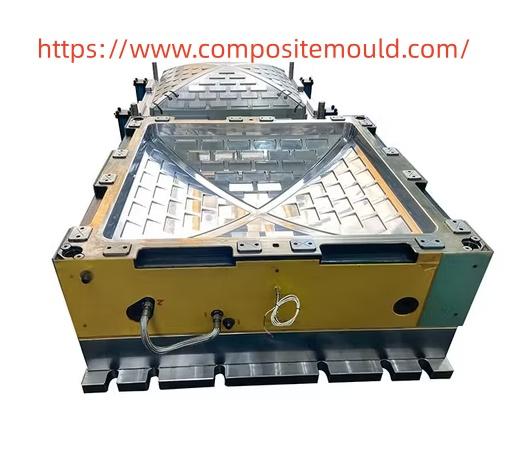
BMC Mould purchasing requires more than comparing quotations or reviewing product photographs. For importers, component manufacturers, engineering teams, and industrial buyers, the decision should begin with a clear understanding of the finished part, its working environment, and the expected production volume. Sharing accurate technical information with a manufacturer helps establish suitable design requirements, clarify project responsibilities, and reduce avoidable changes during production.
Start With the Finished Component Requirements
Before discussing tooling costs, buyers should prepare the information that defines the finished component. This normally includes 2D drawings, 3D models, overall dimensions, wall thickness, weight, material grade, and expected tolerances.
The intended application also matters. Electrical enclosures, automotive components, appliance parts, and industrial housings may have different requirements for insulation, mechanical strength, heat resistance, and surface appearance.
Buyers should identify critical dimensions and functional areas in their drawings. For example, mounting holes, threaded inserts, sealing surfaces, and assembly positions may require specific dimensional controls. Marking these areas helps engineers understand which features need particular attention during design and inspection.
If the component design is still under development, discuss possible adjustments before manufacturing begins. This gives both parties an opportunity to review manufacturability before committing to the production schedule.
Confirm Material Characteristics and Processing Conditions
Bulk molding compound formulations can vary in resin composition, reinforcement, fillers, and other additives. These differences may influence flow behavior, curing conditions, shrinkage, and surface appearance.
Buyers should provide the intended material grade and available technical data sheet. If several formulations are under consideration, explain the differences and identify which properties are essential for the finished component.
Processing information should also be shared. Relevant details may include the press model, available clamping force, operating temperature range, loading method, and expected production cycle.
A manufacturer needs this information to evaluate how the material will behave inside the cavity. Without a clear understanding of the compound and processing environment, design decisions may rely on assumptions that need revision during sampling.
Examine the Internal Structure and Cavity Layout
Cavity arrangement has a direct relationship with part geometry and production planning. Buyers should ask how the proposed structure accommodates ribs, bosses, holes, inserts, thin sections, and other detailed features.
The number of cavities should be considered alongside the expected output. A multi-cavity arrangement may suit certain production targets, while a single-cavity structure may be more practical for components with specific dimensions or development requirements.
Parting-line position, vent locations, and material distribution also deserve discussion. Trapped air or unsuitable filling conditions can contribute to incomplete areas, surface marks, or excess flash. Engineers should explain how the proposed design addresses these possible issues.
For complicated components, request drawings that show the cavity arrangement and major structural details. Reviewing these materials before approval can make technical communication clearer.
Review Heating and Temperature Control
Thermoset processing depends on suitable heating and curing conditions. Buyers should ask how the tooling will maintain the temperature requirements specified for the selected compound.
Important points include heating element placement, temperature sensor positions, wiring arrangements, insulation, and access for maintenance. Temperature distribution across the working area should also be considered, particularly when the component has different wall thicknesses or a complicated shape.
Rather than relying on general statements, buyers can request a description of the proposed heating arrangement and the method used to check temperature conditions during trials.
These discussions help establish whether the design is compatible with the intended production process and the available equipment.
Check Surface Finish and Demolding Arrangements
The cavity surface should reflect the appearance and functional requirements of the finished part. Some components need a smooth appearance, while others may require a specified texture or particular surface treatment.
Demolding is another important design consideration. Draft angles, ejector positions, inserts, and local structural details can affect how the finished component is released.
Buyers should explain whether visible marks are acceptable and identify surfaces that must remain free from damage. The manufacturer can then review the release arrangement and discuss any design features that may require adjustment.
Ask About Inspection and Trial Procedures
A clear inspection plan helps both parties evaluate the completed tooling against agreed requirements. Before ordering, define the dimensions to be measured, acceptable appearance conditions, functional checks, and required documentation.
Trial production provides an opportunity to assess filling, curing, surface appearance, dimensional results, and demolding behavior under agreed processing conditions. Buyers should ask how trial samples will be recorded and how identified issues will be handled.
It is also useful to agree on sample quantities, inspection responsibilities, revision procedures, and approval milestones. Written records make it easier to track adjustments throughout the project.
Evaluate Manufacturing Communication and Project Support
A tooling supplier should be able to explain the proposed manufacturing route, project schedule, machining arrangements, assembly process, and inspection activities. Buyers can also ask about experience with similar component structures and material applications.
Quotation details deserve careful review. Confirm what is included, which services are optional, how design changes are handled, and whether spare components or maintenance guidance are available.At compositemould, buyers can discuss drawings, material information, production targets, and customized requirements before confirming a project. Providing these details helps the engineering team understand the intended application and prepare a proposal based on the actual manufacturing needs. To review available products and discuss a project, visit https://www.compositemould.com/product/ and share your component drawings and technical requirements with the team.

 English
 Arabic
 French
 Spanish
 Portuguese
 Deutsch
 Turkish
 Dutch
 Italiano
 Romaian
 Portuguese (Brazil)
 Greek