
Position Sensor Market: Emerging Technologies Transforming Industrial Automation
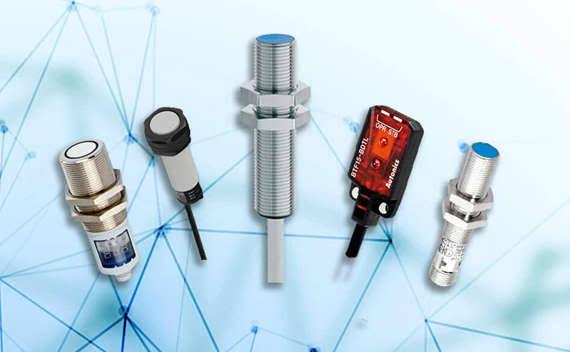
In a group discussion centered on smart manufacturing and industrial automation, position sensors quickly emerge as the unseen backbone of modern machinery. Every robotic arm, automated guided vehicle, CNC machine tool, and conveyor line depends on real-time spatial feedback to move accurately, avoid collisions, and maintain repeatable tolerances. When engineers and business analysts debate the evolving role of sensing hardware, they often point out how non-contact technologies—such as magnetic, inductive, optical, and laser displacement sensors—are steadily replacing older wear-prone potentiometric designs. Reviewing a structured Position Sensor Market analysis gives group participants concrete grounding on why non-contact sensing commands a dominant share while laser displacement solutions advance rapidly in sub-micron tasks. Rather than treating sensors as simple commodity components, discussion participants can examine how integrated diagnostics, digital interfaces, and harsh-environment durability turn basic motion feedback into actionable operational intelligence.
Group discussions also benefit from exploring the trade-offs between sensor accuracy, ruggedness, and total system cost across diverse factory floors. A semiconductor wafer handler or vertical farming gantry demands sub-millimeter precision, whereas heavy agricultural or construction equipment prioritizes survival against mud, vibration, high hydraulic pressures, and extreme temperatures. Participants can debate how original equipment manufacturers balance analog legacy interfaces against modern digital protocols like CAN, SENT, and IO-Link that support predictive maintenance and edge analytics. Examining both engineering constraints and commercial adoption timelines helps ensure the conversation moves beyond buzzwords to practical industrial reality.
Frequently Asked Questions
Why are non-contact sensors a major talking point in industrial automation discussions?
Non-contact sensors eliminate mechanical friction and physical wear, delivering longer service life, higher reliability in dusty or high-vibration environments, and better precision than traditional contact-based potentiometers.
How do digital output interfaces change the value of position sensors in factories?
Digital protocols such as IO-Link, CAN, and SENT allow bidirectional communication and real-time diagnostic feedback, enabling predictive maintenance that helps factories reduce unplanned downtime.

 English
 Arabic
 French
 Spanish
 Portuguese
 Deutsch
 Turkish
 Dutch
 Italiano
 Russian
 Romaian
 Greek