
What Should Buyers Check Before Choosing a Flat Connector?
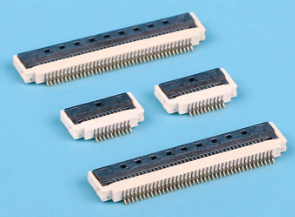
Flat Connector selection requires attention to several technical details before an electronic product enters production. For purchasing teams, the decision involves more than comparing product dimensions or quotation prices. Cable compatibility, circuit board layout, electrical requirements, mechanical structure, and assembly conditions all influence whether a selected component fits the intended application. By preparing clear specifications and discussing project requirements with a manufacturer, buyers can make more informed purchasing decisions and reduce unnecessary adjustments during product development.
Check the Cable Dimensions Before Making a Selection
Cable specifications provide an important starting point for product selection. Buyers should identify the cable width, thickness, contact quantity, pitch, and exposed conductive area before requesting a quotation.
These measurements need to correspond with the selected product configuration. Even a small difference in contact spacing may affect alignment during installation. Buyers should also confirm the cable insertion direction because different designs may require different contact arrangements.
Technical drawings can make this process easier. Rather than describing measurements through text alone, purchasing teams can provide dimensional drawings that show the relevant details. This gives the manufacturer a clearer understanding of the intended design and helps identify potential compatibility issues before production.
Consider the Circuit Board Layout
Available installation space is another important consideration, especially for compact electronic equipment. Displays, household appliances, industrial control panels, and portable devices often contain multiple internal components within a limited area.
Buyers should review the mounting height, installation direction, cable exit position, and surrounding component locations. These factors may affect how the selected product fits into the overall assembly.
Cable routing also deserves attention. If a flexible cable needs to pass around other components, the design should provide enough room for installation without creating unnecessary pressure or bending.
Providing a circuit board layout or assembly drawing can help the supplier evaluate the proposed configuration. This early discussion may also reveal opportunities to adjust dimensions or mounting arrangements before samples are prepared.
Evaluate the Locking Structure
Different locking mechanisms serve different assembly requirements. Buyers should consider how the cable will be inserted, secured, and removed during manufacturing and maintenance.
For example, flip-lock structures allow users to open and close a movable locking part during cable installation. Other designs may use different retention methods according to their intended applications.
Zero Insertion Force (ZIF) configurations can also be considered when the assembly process requires convenient cable insertion. However, buyers should verify the supported cable thickness and contact arrangement before confirming a model.
The locking structure should match both the cable design and the assembly procedure. Reviewing these details together helps purchasing teams avoid difficulties that might otherwise appear during production testing.
Review Electrical and Operating Requirements
Electrical specifications should correspond with the working conditions of the finished equipment. Important parameters include rated voltage, current capacity, contact resistance, insulation resistance, and signal transmission requirements.
Different electronic applications may require different electrical characteristics. A display module, control board, and household appliance may have different operating conditions and circuit arrangements.
Temperature is another factor worth considering. If the finished product operates in an environment with frequent temperature changes, buyers should review the specified operating range and relevant material characteristics.
Requesting technical documentation is a practical way to verify these details. Buyers should compare the documented specifications with their application requirements instead of relying only on product appearance or general descriptions.
Test Samples Before Confirming Large Orders
Sample evaluation allows purchasing teams to check product compatibility under actual assembly conditions. A sample can be installed on the intended circuit board to determine whether the cable fits correctly and whether the locking mechanism operates as expected.
During testing, buyers should pay attention to several aspects:
Cable insertion and removal procedures
Contact alignment and electrical continuity
Locking operation and cable retention
Mounting dimensions and soldering conditions
Compatibility with surrounding electronic components
For applications involving specific environmental conditions, additional testing can be arranged according to the project requirements.
Any issues discovered during evaluation should be documented and communicated to the supplier. Once adjustments are confirmed, updated drawings and specifications can serve as references for subsequent production orders.
Understand the Manufacturer's Production Capabilities
A manufacturing partner should be able to understand technical requirements and provide clear information throughout the purchasing process. Buyers can ask about available configurations, material options, customization procedures, inspection arrangements, and sample support.
For OEM projects, sharing the intended application, technical drawings, expected quantities, and special requirements can make initial communication more productive.
wendaelectronics provides electronic connection products for different circuit board and cable arrangements. Buyers can discuss their project specifications with the team to review available configurations and potential customization requirements.
It is also useful to confirm production schedules, packaging details, order quantities, and technical documentation before placing an order. Clear written specifications help both parties maintain a consistent understanding of the project.
Prepare a Purchasing Checklist
Before requesting a quotation, buyers can organize the following information to make the purchasing process more efficient:
Cable width, thickness, and contact quantity
Required pitch and contact orientation
Installation direction and available board space
Electrical ratings and operating temperature
Preferred locking mechanism
Technical drawings and sample requirements
Expected order quantity and delivery schedule
Not every electronic project has identical requirements. Therefore, the purchasing checklist should reflect the actual application rather than rely on a general selection formula.When manufacturers receive complete technical information, they can review the requested configuration more clearly and discuss relevant production arrangements. This also provides a useful reference for sample approval, manufacturing preparation, and repeat orders.For businesses developing new electronic equipment or updating existing circuit designs, careful preparation can make supplier communication more effective. wendaelectronics welcomes inquiries about product specifications, customized requirements, and OEM cooperation. Buyers can review available models and discuss their project needs through the official product page: https://www.wendaelectronics.com/

 English
 Arabic
 French
 Spanish
 Portuguese
 Turkish
 Dutch
 Italiano
 Russian
 Romaian
 Portuguese (Brazil)
 Greek