
Passive Optical LAN Market: Emerging Technologies Transforming Enterprise Network Infrastructure
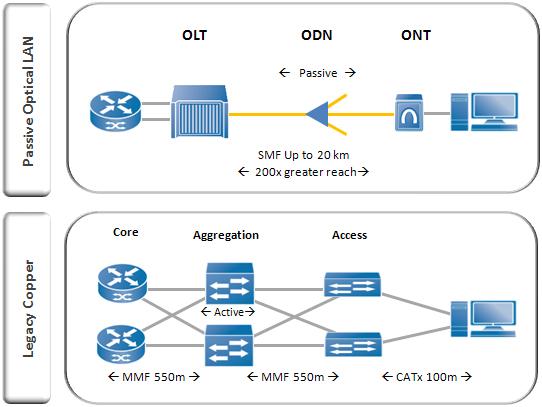
Enterprise local area networks are undergoing a decisive architectural transformation as organizations dismantle bulky, power-hungry copper cabling systems in favor of streamlined fiber-optic topologies. Participants engaging in collaborative discussions regarding modern building connectivity must evaluate how single-mode fiber and unpowered optical splitters eliminate intermediate wiring closets while delivering virtually unlimited bandwidth headroom. A thorough review of the Passive Optical Lan Market analysis demonstrates that commercial enterprises, universities, and hospitals increasingly adopt point-to-multipoint optical architectures to cut energy consumption and lower total cost of ownership. Conventional Ethernet architectures require power-intensive aggregation switches on every floor, creating heat buildup and demanding expensive cooling equipment. Group discussions often highlight how optical LAN flattens the network hierarchy into a centralized management model, simplifying security policy enforcement and freeing up valuable real estate across multi-story facilities.
Beyond immediate operational savings, the long-term scalability and lifecycle economics of fiber infrastructure dictate enterprise adoption strategies. Stakeholders must compare initial optical transceiver investments against decades of future-proofed performance that requires no physical cable replacement when upgrading from gigabit to ten-gigabit or higher speeds. Industry evaluations indicate that green building certifications and corporate carbon neutrality pledges serve as powerful catalysts, since passive optical architectures reduce plastic pathway waste and slash electricity usage. As smart building systems integrate lighting, HVAC, and physical security onto unified IP networks, participants should examine how technicians transition from traditional copper termination workflows to specialized fiber-splicing and optical power budgeting practices.
Frequently Asked Questions
-
How does a Passive Optical LAN differ from a traditional copper Ethernet LAN? It replaces multi-tiered active workgroup switches and bulky copper cables with single-mode fiber and unpowered optical splitters, collapsing network layers into a centralized management architecture.
-
Why is Passive Optical LAN considered an environmentally sustainable networking choice?Because optical splitters require no electricity or cooling, the architecture drastically lowers power consumption, reduces copper and plastic cable waste, and supports green building certifications.
➤➤➤Explore MRFR’s Related Ongoing Coverage In Semiconductor Industry:
Television And Radio Advertising Services Market
Treasury Management Solutions Market
Canada Commercial Printing Market
China Commercial Printing Market
India Commercial Printing Market
Japan Commercial Printing Market
Us Connected Iot Devices Market

 English
 French
 Spanish
 Portuguese
 Deutsch
 Turkish
 Dutch
 Italiano
 Russian
 Romaian
 Portuguese (Brazil)
 Greek