
Smart Thermostat Market: Emerging Trends Transforming Intelligent Home Climate Control
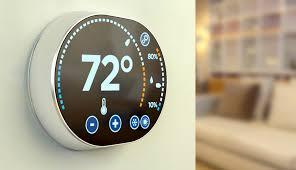
Predictive Climate Control: How Machine Learning Algorithms Are Turning Home Thermostats into Autonomous Energy Managers
For decades, managing household heating and cooling required either manual dial adjustments or rigid, pre-programmed seven-day schedules that rarely matched real family routines. Today, artificial intelligence and occupancy-sensing algorithms are transforming wall-mounted controllers into autonomous energy managers that learn household habits, anticipate local weather shifts, and optimize thermal comfort room by room. By combining geofencing data from smartphones with remote wireless room sensors, modern devices detect when occupants leave for work or return early, automatically dialing back HVAC runtime without sacrificing comfort. Findings from a recent Smart Thermostat Market analysis indicate that AI-driven adaptive learning algorithms can trim annual residential heating and cooling bills by ten to twelve percent. Rather than forcing homeowners to become HVAC engineers, predictive software quietly balances thermal inertia, humidity levels, and electricity rate tiers behind the scenes.
Yet handing autonomous control of household climate systems over to cloud-connected algorithms sparks lively group discussion around transparency, overrides, and edge reliability. Homeowners occasionally express frustration when an AI learning algorithm misinterprets an unusual weekend schedule, cooling an empty house or warming bedrooms prematurely. Privacy advocates also raise questions about occupancy telemetry, noting that continuous motion and presence logs reveal intimate details about when families sleep, travel, or host guests. Consequently, manufacturers are increasingly shifting AI inference directly onto local device chips—allowing thermostats to learn household patterns privately without constant cloud dependency. Balancing effortless automation with intuitive manual overrides and strict local data privacy remains central to consumer trust.
FAQs
-
How do learning smart thermostats save energy compared to traditional programmable models? Learning thermostats use occupancy sensors, smartphone geofencing, and weather forecasts to adapt automatically to irregular schedules, eliminating wasted heating or cooling when homes are empty.
-
Can smart thermostats still function if home Wi-Fi or cloud servers go offline? Yes, modern smart thermostats continue operating basic heating and cooling schedules locally on the wall unit, though remote smartphone control and cloud weather updates pause until connectivity returns.
➤➤➤Explore MRFR’s Related Ongoing Coverage In Semiconductor Industry:
Asset Management It Solution Market
Automotive Sensor Camera Technologie Market
Bidirectional Battery Switch Market
Binder Jetting 3D Printing Technology Market
Bird Detection Systems For Airport Market
Capacitive Pressure Sensor Market

 English
 Arabic
 French
 Portuguese
 Deutsch
 Turkish
 Dutch
 Italiano
 Russian
 Romaian
 Portuguese (Brazil)
 Greek