
Radio-Frequency Identification Market Growth Trends and Future Technology Opportunities
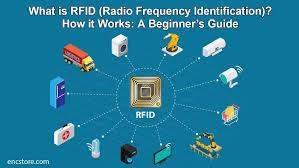
The rapid digitalization of industrial workflows, retail logistics, and healthcare administration has positioned wireless tracking technologies at the forefront of modern supply chain transformation. At the center of this industrial shift is the radio-frequency identification market, which encompasses passive, active, and battery-assisted passive tag architectures paired with high-performance readers and middleware platforms. Radio-frequency identification (RFID) technology allows enterprises to automate asset tracking, monitor inventory levels in real time, and eliminate manual barcode scanning bottlenecks across complex distribution networks. Driven by the expansion of global e-commerce, strict regulatory mandates for medical device traceability, and aggressive retail omni-channel strategies, RFID deployment has migrated from a specialized logistics tool into a core operational requirement. In retail environments, item-level tagging enables precise inventory visibility, preventing stockouts and powering buy-online-pick-up-in-store fulfillment models. Similarly, manufacturing and automotive sectors utilize ruggedized RFID tags to monitor work-in-progress components through harsh thermal and chemical production environments. However, scaling RFID deployments across complex supply chains presents significant operational hurdles, including high initial reader installation expenses, signal interference caused by metallic or liquid surfaces, software integration complexities, and privacy concerns related to post-sale item tracking. Consequently, system integrators, tag manufacturers, and enterprise software vendors must establish standardized data formats and robust cybersecurity measures to ensure seamless, secure data exchange across global supply chain networks.
Navigating this rapidly expanding technological landscape requires a deep, data-driven Radio-Frequency Identification Market analysis to evaluate shifting technological adoption curves, reader architecture migrations, and emerging commercial opportunities across diverse end-use verticals. Industry analysts continuously examine the transition from high-frequency (HF) and low-frequency (LF) systems toward ultra-high-frequency (UHF) RAIN RFID configurations that offer extended read ranges and rapid multi-tag scanning capabilities. Fluctuations in semiconductor wafer pricing, substrate material availability, and inlay manufacturing capacities heavily influence tag unit economics and adoption rates among mid-market logistics operators. Simultaneously, integration with cloud-native inventory management platforms and edge-computing nodes allows organizations to analyze massive volumes of read data instantly, transforming raw telemetry into actionable supply chain intelligence. As corporate sustainability initiatives push for greener manufacturing practices, suppliers are developing eco-friendly paper-based substrates and plastic-free antenna inlays to reduce electronic waste. Ultimately, rigorous analytical frameworks empower enterprise executives, logistics planners, and technology investors to optimize capital outlays, overcome deployment challenges, and achieve long-term operational resilience in an increasingly automated global marketplace.
Frequently Asked Questions
What primary drivers are accelerating the global adoption of RFID technology? Adoption is primarily driven by the expansion of e-commerce logistics, the need for real-time item-level inventory visibility in omni-channel retail, government traceability mandates in healthcare and livestock management, and advancements in cost-effective UHF RAIN RFID tags.
How do metallic and liquid environments impact RFID tag performance? Metals reflect radio frequency signals while liquids absorb them, creating signal interference. To overcome this, manufacturers design specialized on-metal tags and liquid-resistant packaging featuring protective spacers and tuned antenna geometries that preserve signal integrity.
➤➤➤Explore MRFR’s Related Ongoing Coverage In Semiconductor Industry:
Tax Law Consulting Services Market
Technology And Software Development Consulting Services Market
Technology Strategy And Planning Services Market
Television And Radio Advertising Services Market
Third Party Logistics (3Pl) Services Market
Treasury Management Solutions Market
Vehicle Leasing And Rental Services Market
Video Marketing Services Market
Vocational Training Services Market
Waste Management Consulting Services Market

 English
 Arabic
 French
 Spanish
 Portuguese
 Turkish
 Dutch
 Italiano
 Russian
 Romaian
 Portuguese (Brazil)
 Greek