
IATA Lithium Battery Shipping Rules for Air Transport: What Every Shipper Must Know
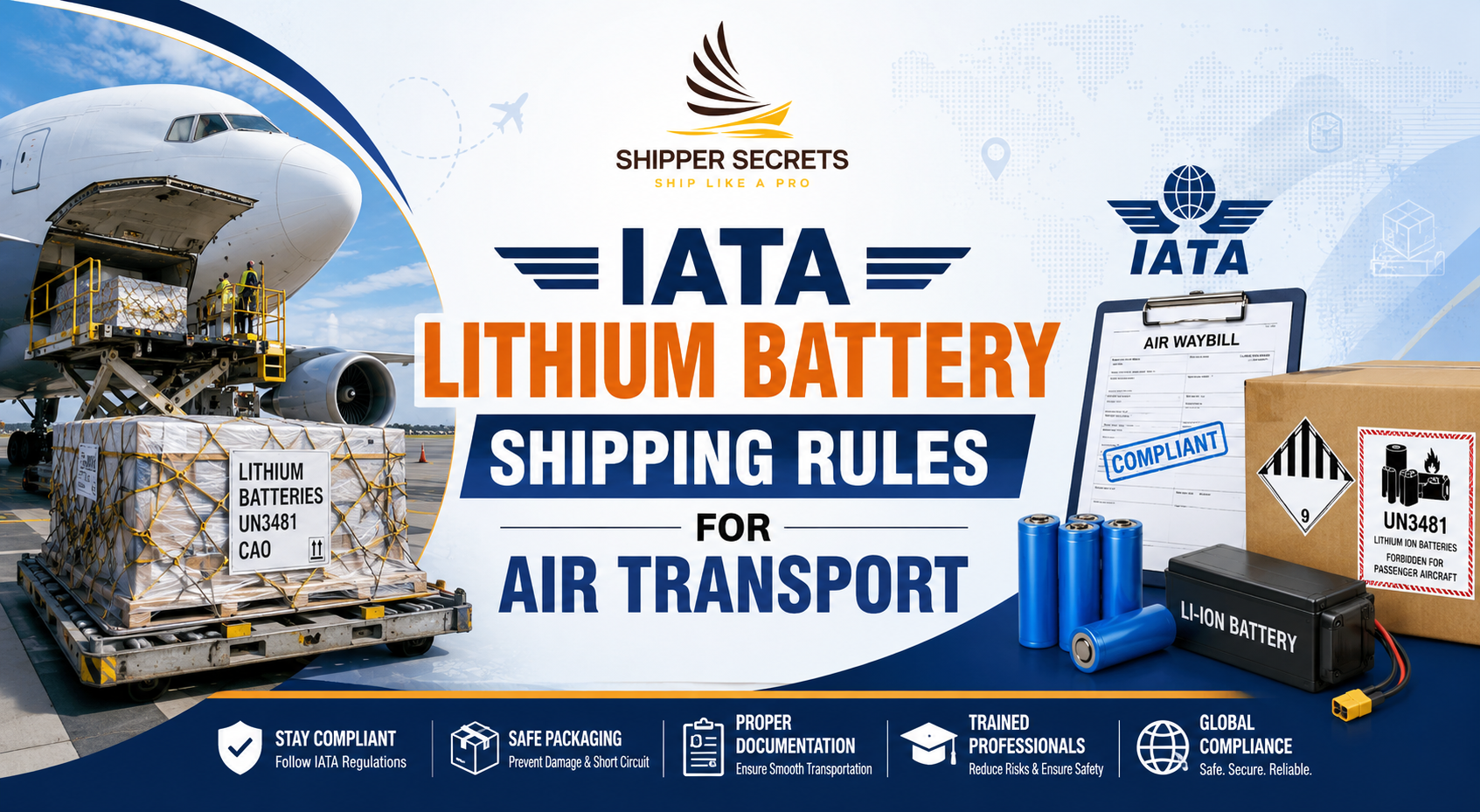
The global demand for lithium batteries continues to grow as they power smartphones, laptops, medical devices, power tools, drones, and electric vehicles. While these batteries are essential for modern technology, they also present unique safety challenges during air transportation.
Because lithium batteries can overheat, catch fire, or enter thermal runaway if damaged or improperly packaged, air carriers follow strict regulations established by the International Air Transport Association (IATA). Understanding these requirements is critical for shippers, freight forwarders, manufacturers, and logistics professionals involved in air cargo operations.
This guide explains the key IATA lithium battery shipping rules for air transport and how businesses can remain compliant while ensuring safety throughout the supply chain.
👉https://shippersecrets.com/courses/
Understanding Lithium Battery Risks
Lithium batteries store a significant amount of energy in a compact space. If exposed to excessive heat, physical damage, manufacturing defects, or short circuits, they can generate intense fires that are difficult to extinguish.
Air transport presents additional challenges because:
-
Fires can spread rapidly in confined aircraft spaces.
-
Battery incidents may occur at high altitudes.
-
Damaged batteries can release hazardous gases.
-
Large quantities of batteries increase operational risk.
For these reasons, lithium batteries are among the most heavily regulated dangerous goods transported by air.
Types of Lithium Batteries Covered by IATA Regulations
Lithium-Ion Batteries
Lithium-ion batteries are rechargeable and commonly found in:
-
Mobile phones
-
Laptops
-
Tablets
-
Cameras
-
Power banks
-
Electric vehicles
-
Industrial equipment
Lithium Metal Batteries
Lithium metal batteries are generally non-rechargeable and are commonly used in:
-
Watches
-
Medical equipment
-
Emergency devices
-
Tracking systems
-
Security equipment
Each battery type has specific classification and shipping requirements under IATA Dangerous Goods Regulations (DGR).
Lithium Battery UN Numbers
Correct classification is the first step in compliance.
Lithium-Ion Batteries
-
UN3480 – Lithium-ion batteries shipped alone
-
UN3481 – Lithium-ion batteries packed with equipment
-
UN3481 – Lithium-ion batteries contained in equipment
Lithium Metal Batteries
-
UN3090 – Lithium metal batteries shipped alone
-
UN3091 – Lithium metal batteries packed with equipment
-
UN3091 – Lithium metal batteries contained in equipment
Selecting the correct UN number determines the packaging, labeling, documentation, and handling requirements for the shipment.
State of Charge Requirements
One of the most important air transport requirements applies to standalone lithium-ion batteries.
When shipped under UN3480, lithium-ion batteries must generally be transported at a reduced State of Charge (SoC) to minimize fire risks.
Lower charge levels significantly reduce the energy available if a battery becomes damaged during transport, improving overall flight safety.
Shippers must verify battery charge levels before preparing shipments for air transport.
Packaging Requirements for Air Shipments
Proper packaging plays a critical role in preventing incidents during transportation.
Lithium batteries must be packaged to:
-
Prevent short circuits
-
Protect terminals from contact
-
Avoid accidental activation
-
Prevent movement within packaging
-
Minimize physical damage during handling
Common packaging practices include:
-
Individual battery protection
-
Non-conductive cushioning materials
-
Strong outer packaging
-
Secure internal packaging
-
Impact-resistant containers when required
Packages must withstand normal transportation conditions without compromising battery safety.
Marking and Labeling Requirements
Most lithium battery shipments require specific markings and labels to alert handlers and carriers about the contents.
Common requirements include:
Lithium Battery Mark
This mark identifies the package as containing lithium batteries and provides important handling information.
Class 9 Hazard Label
Certain regulated lithium battery shipments require a Class 9 hazard label to indicate dangerous goods classification.
Cargo Aircraft Only Label
Some battery shipments are restricted to cargo aircraft and must display the appropriate label.
Incorrect or missing labels are among the most common reasons for shipment rejection by airlines.
Documentation Requirements
Depending on the shipment type and regulatory classification, documentation may include:
Air Waybill Entries
Specific statements may be required on the air waybill to indicate lithium battery contents.
Dangerous Goods Declaration
Fully regulated shipments often require a Shipper's Declaration for Dangerous Goods.
Supporting Records
Companies should maintain:
-
Battery specifications
-
Testing records
-
Compliance documentation
-
Employee training records
Accurate documentation helps prevent delays and demonstrates regulatory compliance during inspections.
👉https://shippersecrets.com/who-needs-li-ion-shipping-training/
Battery Testing Requirements
Before lithium batteries can be shipped by air, they must undergo safety testing.
Manufacturers must ensure batteries successfully complete required transportation safety tests before entering the supply chain.
Testing helps verify that batteries can withstand conditions such as:
-
Altitude simulation
-
Vibration
-
Shock
-
Temperature variation
-
Impact resistance
Shippers should obtain confirmation that batteries meet applicable testing requirements before transportation.
Employee Training Requirements
Anyone involved in preparing, packaging, offering, handling, or accepting lithium battery shipments must receive appropriate training.
Training programs typically cover:
-
Battery classification
-
Packaging procedures
-
Marking and labeling
-
Documentation requirements
-
Emergency response procedures
-
Regulatory updates
Proper training helps reduce shipping errors and improves overall transportation safety.
Common Lithium Battery Shipping Mistakes
Many air cargo delays occur because of avoidable compliance issues.
Common mistakes include:
-
Using the wrong UN number
-
Incorrect packaging methods
-
Missing lithium battery marks
-
Improper documentation
-
Failure to protect battery terminals
-
Shipping damaged batteries
-
Inadequate employee training
-
Exceeding quantity limitations
Even minor mistakes can result in shipment rejection, airline penalties, or regulatory enforcement actions.
Best Practices for Compliance
Organizations shipping lithium batteries by air should follow these best practices:
Verify Battery Classification
Always confirm the correct battery chemistry and applicable UN number.
Review Applicable Packing Instructions
Ensure packaging complies with the relevant IATA packing instruction.
Inspect Batteries Before Shipment
Never transport batteries that are damaged, defective, swollen, leaking, or recalled.
Maintain Training Records
Ensure all employees involved in shipping operations remain properly trained.
Perform Compliance Audits
Regular reviews help identify potential compliance gaps before shipments are rejected.
Stay Updated on Regulatory Changes
Lithium battery regulations are updated regularly, making ongoing compliance monitoring essential.
Why IATA Lithium Battery Training Matters
Lithium battery regulations can be complex and frequently updated. Training helps organizations:
-
Reduce shipment rejections
-
Improve workplace safety
-
Maintain regulatory compliance
-
Avoid costly fines
-
Build customer confidence
-
Ensure safe air transportation practices
Companies that regularly ship batteries should invest in ongoing lithium battery training to stay current with changing requirements.
Conclusion
Lithium batteries are among the most regulated dangerous goods transported by air. Proper classification, packaging, labeling, documentation, and training are essential for safe and compliant shipments.
By understanding and following IATA lithium battery shipping rules, businesses can minimize risks, avoid costly delays, and ensure their products move safely through the global air cargo network. Whether shipping standalone batteries, batteries packed with equipment, or batteries installed in devices, compliance remains the key to successful air transport operations.
FAQs – IATA Lithium Battery Shipping Rules for Air Transport
1. What are the IATA regulations for shipping lithium batteries by air?
IATA regulations establish requirements for the classification, packaging, labeling, documentation, and handling of lithium batteries transported by air to ensure safety and compliance.
2. Do lithium batteries require special packaging for air transport?
Yes. Lithium batteries must be packaged to prevent short circuits, accidental activation, movement within the package, and physical damage during transportation.
3. What is the difference between UN3480 and UN3481?
UN3480 applies to lithium-ion batteries shipped on their own, while UN3481 applies to lithium-ion batteries packed with equipment or contained within equipment.
4. Is lithium battery training required for air shipments?
Yes. Personnel involved in preparing, handling, or shipping lithium batteries by air should receive appropriate training to understand applicable regulations and safety requirements.
5. Can damaged or defective lithium batteries be shipped by air?
Damaged, defective, or recalled lithium batteries are subject to strict restrictions and generally cannot be shipped under standard air transport requirements due to increased safety risks.
📞 Contact Us
📍 868 Cardiff Road, Naperville, IL 60565
📞 708.275.8418
🌐 Get in touch with our logistics experts for reliable shipping and freight solutions. 🚚✈️📦

 English
 Arabic
 French
 Spanish
 Portuguese
 Deutsch
 Turkish
 Dutch
Dutch
 Italiano
 Russian
 Portuguese (Brazil)
 Greek
Greek