
Why Does SMC Mould Design Matter for Product Quality?
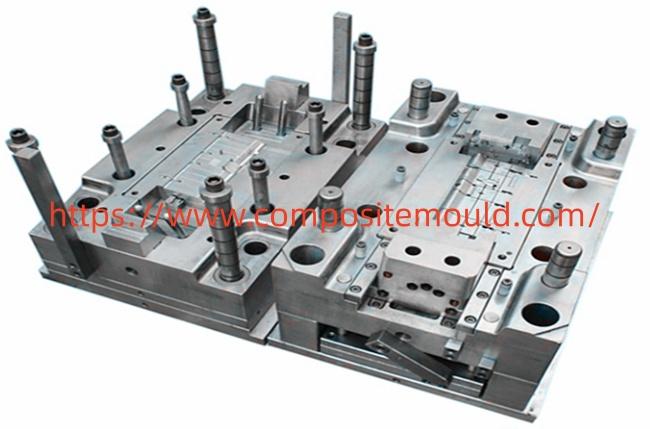
SMC Mould selection is an important decision for manufacturers planning to produce composite components for automotive, electrical, construction, transportation, and industrial applications. Buyers need to evaluate more than the initial quotation when selecting a tooling supplier. Product geometry, material characteristics, mold construction, production equipment, and inspection requirements all influence whether a customized tool can meet the intended manufacturing needs. Preparing these details before ordering can help reduce communication gaps and unnecessary design changes.
Start with the Product Drawing and Design Requirements
A detailed product drawing gives the manufacturer a clear starting point for tooling development. Buyers should prepare updated 2D drawings and 3D models that show the component dimensions, wall thickness, ribs, mounting positions, and other important structural features.
Special attention should be given to areas that affect assembly or installation. For example, mounting holes, connecting surfaces, and dimensional interfaces may require specific tolerances. If the component has visible surfaces, buyers should also identify the areas where appearance requirements are particularly important.
Before approving the design, manufacturers and customers should discuss whether the existing geometry is suitable for the intended compression molding process. Early design communication can help identify potential manufacturing difficulties before machining begins.
Confirm Material Compatibility
Different composite formulations may have different flow characteristics, curing behavior, and shrinkage requirements. These factors should be considered when developing the tooling structure.
Buyers should provide the intended material grade and available technical information. If the material has already been used in previous production projects, sharing processing experience can also help the engineering team understand the expected manufacturing conditions.
Material information may influence cavity design, heating arrangements, venting positions, and other tooling details. Rather than relying on general assumptions, buyers should confirm the material specifications with the manufacturer before the final design is approved.
Review the Mold Structure and Heating System
The internal structure of a mold directly relates to how the material fills the cavity and how the finished component is released. Buyers should ask about the proposed cavity layout, parting line, guide system, ejector arrangement, and maintenance access.
Heating design also deserves attention. Temperature distribution across the mold can influence material curing and dimensional consistency. For larger components, the arrangement of heating channels and temperature measurement points should be reviewed during the engineering stage.
Buyers can request a design review to understand how the proposed structure addresses their product requirements. This discussion is particularly useful when the component includes deep sections, complex ribs, or areas with different wall thicknesses.
Pay Attention to Venting and Surface Requirements
Air evacuation is an important consideration during compression molding. If air cannot escape properly while the material fills the cavity, defects such as voids, incomplete filling, or surface irregularities may occur.
The venting arrangement should therefore be evaluated together with the component geometry and expected material flow. Buyers should ask how the manufacturer plans to address potential air-trap areas and whether the vent locations can be maintained during regular production.
Surface requirements should also be defined clearly. Terms such as smooth finish, textured surface, and paint-ready appearance need specific inspection standards to avoid different interpretations between the buyer and supplier. Providing reference samples or approved appearance criteria can make discussions more precise.
Match Tooling Specifications with Production Equipment
A customized mold must be compatible with the press used at the customer's facility. Buyers should provide relevant machine information, including platen dimensions, available clamping force, opening distance, mold height, and heating connections.
These details help engineers review installation requirements before manufacturing. If the press information is incomplete, problems may arise during mold installation or production preparation.
Expected production volume should also be discussed. A project intended for sample development may have different tooling priorities from one planned for continuous manufacturing. Buyers should explain their estimated output and future production plans so the manufacturer can consider suitable structural and maintenance arrangements.
Establish Trial and Inspection Standards
Mold trials provide an opportunity to evaluate whether the tool can produce components according to the agreed specifications. Before the trial stage, buyers should confirm the material to be used, sample quantity, inspection items, and required documentation.
Dimensional inspection should focus on critical areas identified in the product drawing. Appearance checks, assembly verification, and other functional evaluations may also be necessary depending on the application.
Both parties should agree on how trial results will be recorded and how design adjustments will be handled. A clear approval process helps prevent disagreements when the tooling moves from development toward regular production.
Evaluate Supplier Communication and Project Support
A tooling project involves several stages, from drawing review and design confirmation to machining, assembly, trial production, and delivery. Buyers should understand how the manufacturer manages each stage and communicates project progress.
Useful questions include whether design modifications can be discussed, how production updates are provided, what inspection records are available, and how maintenance support is arranged after delivery.For overseas customers, communication about packaging, shipping preparation, and technical documentation is also important. Confirming these details before placing an order can make international purchasing easier to coordinate.At compositemould, project discussions can begin with product drawings, application details, material information, and production requirements. Buyers planning a customized tooling project can visit https://www.compositemould.com/product/ to review relevant product information and discuss their requirements with the manufacturing team.

 English
 Arabic
 French
 Spanish
 Portuguese
 Deutsch
 Turkish
 Dutch
 Italiano
 Russian
 Portuguese (Brazil)
 Greek