
Customer Experience Analytics Market Size Reflects Expanding Demand for Digital Insight
Understanding Market Size
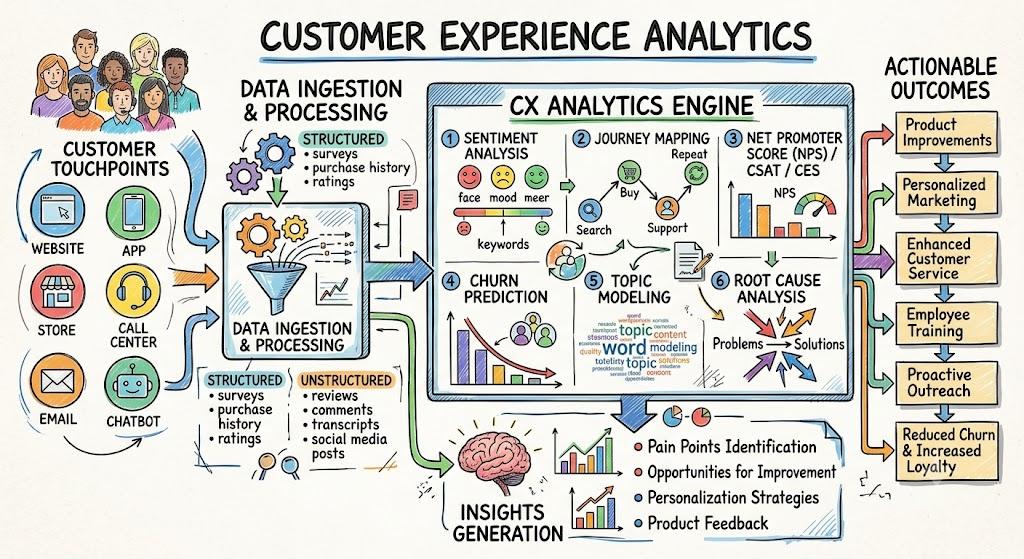
The Customer Experience Analytics Market Size reflects the growing importance organizations place on understanding and improving customer interactions. Market size generally refers to the value of relevant software, platforms, and services purchased within a defined period and geographic scope. Estimates can vary because research providers use different definitions, include different product categories, or apply different assumptions about revenue. Some assessments focus on dedicated experience analytics platforms, while others include related consulting, integration, and support services. For this reason, readers should examine the methodology behind any published figure before comparing forecasts. The market serves businesses seeking to analyze feedback, behavior, and operational information across customer touchpoints. Its scope extends from survey analysis and contact center intelligence to journey mapping and predictive modeling. Demand is influenced by digital adoption, customer expectations, available budgets, and the ability of vendors to demonstrate measurable outcomes. Understanding these components provides a more useful foundation than relying on a single headline number.
Factors Influencing Market Value
Several factors affect the value of the customer experience analytics market. First, the number of organizations investing in analytics can expand as businesses recognize the need to understand complex, multichannel journeys. Second, spending per customer may increase when organizations add new users, analytical features, integrations, or professional services. Third, enterprise-wide deployments can generate different purchasing patterns from smaller, department-specific projects. Cloud delivery models also shape spending because subscription fees may be spread over time rather than concentrated in an initial purchase. Market value is additionally affected by economic conditions and procurement priorities. During periods of budget pressure, buyers may favor tools that address a clear operational problem or improve an existing process. Regulations and internal governance requirements can influence adoption costs and implementation timelines. Importantly, market growth does not necessarily mean every organization will spend more each year. Results vary by sector, maturity, competition, and the usefulness of the insights produced.
Segment and Regional Considerations
Market size can be analyzed by component, deployment approach, organization type, industry, and geography. Components commonly include software and related services, although category definitions differ between reports. Organizations may select cloud-based tools, self-managed deployments, or combinations that suit their security and integration requirements. Large enterprises often manage complex customer data across many systems, while smaller businesses may prioritize straightforward implementation and pricing. Industries such as retail, banking, telecommunications, healthcare, and travel use experience analytics for different purposes, so their spending patterns are not identical. Regional demand also depends on digital infrastructure, competitive conditions, data protection rules, and the maturity of local technology ecosystems. A market estimate for one region should therefore not be assumed to apply elsewhere. When evaluating segment figures, buyers and investors should check the measurement period, currency, included vendors, and treatment of related services. These details help distinguish genuine differences in demand from differences in research methodology.
Measuring Business Value
For individual organizations, the practical question is not only how large the market is but whether an analytics investment creates value. Businesses can establish a baseline for relevant measures before deployment, such as support resolution time, repeat contacts, customer satisfaction, or completion rates for a particular journey. After introducing an improvement, teams can assess changes against that baseline while considering other factors that may have influenced the outcome. Controlled tests are useful where feasible, but not every customer experience change can be isolated perfectly. Financial evaluation should also account for subscription fees, integration work, employee training, governance, and ongoing maintenance. A tool with extensive features may be less valuable than a simpler solution if teams cannot use it effectively. Linking analytical findings to decisions is therefore essential. For example, identifying a recurring billing complaint is only the first step; the organization must also fix the issue and verify whether customer outcomes improve.
Market Size Outlook
The outlook for market size depends on the pace at which businesses turn customer data into repeatable improvements. More digital interactions can create additional analytical needs, but data volume alone does not guarantee spending. Buyers increasingly expect solutions to integrate with existing systems, protect sensitive information, and produce findings that business teams can understand. Artificial intelligence may support expansion by making unstructured feedback easier to analyze, while also introducing questions about accuracy and governance. Providers that address these concerns may be better positioned to retain customers and support larger deployments. Consolidation, pricing changes, and the inclusion of analytics in broader software suites can also influence how market revenue is measured. Readers seeking precise historical figures or forecasts should consult current research and review its definitions carefully. Regardless of the estimate used, the underlying commercial opportunity centers on helping organizations improve decisions across the customer lifecycle and demonstrate the results of those improvements.
➤ In-Depth Market Studies by Market Research Future:

 English
 Arabic
 French
 Spanish
 Portuguese
 Deutsch
 Turkish
 Dutch
 Italiano
 Russian
 Romaian
 Greek