
Thailand Solvent Demand Rises as Factories Expand and Go Greener
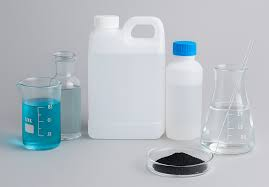
Industrial solvents are liquids that dissolve, disperse or carry other substances, used for thinning paints, cleaning metal parts, formulating adhesives, extracting compounds and producing chemical intermediates. They are chosen for how well they dissolve a target material, how quickly they evaporate and how safely they can be handled in factories.
A recent study by Markntel Advisor highlights that the Thailand Industrial Solvents industries were valued at USD 132 million in 2025 and are projected to reach USD 215.03 million by 2032, registering a CAGR of 7.22% during 2026–2032. Paints and coatings held 46% in 2025, while hydrocarbon held 36%.
Hydrocarbon Solvents Hold Their Lead Across Thai Manufacturing
Hydrocarbon solvents dominate Thailand's industrial solvents sector with about 36%, due to their broad applicability and cost efficiency across high-volume industrial processes. Their leadership is reinforced by strong demand from manufacturing and construction-linked industries requiring consistent solvency performance at scale, while Thailand's domestic refining and petrochemical base ensures stable availability.
Policy further reinforces this position, since Thailand's industrial standards permit controlled hydrocarbon solvent usage under defined safety thresholds. Large-scale users prioritise supply reliability and processing compatibility, and hydrocarbon solvents remain integral to coatings, metal treatment and bulk cleaning, where substitution remains technically constrained, sustaining leadership through volume-intensive consumption in Thailand.
Paints and Coatings Drive the Largest Share of Solvent Use
Paints and coatings represent the leading application segment with about 46%, due to Thailand's infrastructure and industrial asset development. Solvents are essential for viscosity control, surface adhesion and curing performance, making them irreplaceable inputs in coating formulations used across factories, logistics hubs and public infrastructure, and they anchor recurring demand.
Policy-driven infrastructure expansion reinforces this dominance, since government-led transport and industrial estate projects approved in 2025 mandated corrosion-resistant coatings, increasing solvent-intensive coating usage. Investment flows into domestic coatings manufacturing further amplified solvent demand through localised production expansion, while industrial maintenance cycles and asset refurbishment continue to ensure recurring consumption across Thailand.
Factory Expansion Lifts Solvent Volumes Across Export Industries
Thailand's industrial solvents sector has demonstrated expansion over the decade, underpinned by the country's manufacturing base and export-oriented industrial structure. In 2024, Thailand accounted for 2.9 million metric tons of chemical output used in manufacturing, supported by automotive, electronics and construction-linked industries, while the World Bank reported manufacturing value-added exceeded USD 128 billion in 2025.
That capacity expansion has increased solvent demand, since incremental manufacturing lines require solvents for coatings and cleaning. Thailand's automotive and electronics industry produced over 1.47 million cars in 2024, sustaining solvent throughput in paints, degreasing and assembly processes, while total merchandise exports reached USD 339.6 billion in 2025, driven by manufacturing goods.
Cleaner Chemistry Takes Hold as Green Rules Reshape Industry
Current conditions are shaped by industrial upgrading programs and infrastructure consumption. The Thai government's BCG Economy Model Phase II (2025–2030) prioritises higher-value chemical production and cleaner process inputs, influencing solvent substitution and volume expansion in regulated industries, while construction activity linked to transport, estates and logistics hubs expanded in 2025.
The BCG Economy Model aims to employ innovation to create value from Thailand's resources, based on principles including sufficiency economy philosophy, building strength from within and moving forward together. In 2025, Thailand's Board of Investment approved USD 1.87 billion in investment applications within petrochemicals and chemicals, emphasising availability and security.
Solvent Recovery Turns Waste Into Savings for Thai Manufacturers
Thailand's chemical industry is adopting solvent recovery and recycling systems as a response to sustainability policies and environmental strategies, aligned with Thailand's Bio-Circular-Green economic model, which encourages industries to minimise waste generation, improve resource efficiency and lower emissions across manufacturing for a cleaner future across Thai factories every year today.
Recycling systems in Thailand purify used solvents to 99% purity, achieving 80%–95% recovery rates, while reducing carbon emissions by 77% compared with incineration and enabling manufacturers to cut procurement costs by 30%–40%. A recycling facility in Chachoengsao recycles 8,000–9,000 tonnes of solvents, highlighting industrial adoption, while the BCG strategy for industry focuses on upgrading industrial development for competitiveness.
Tougher Rules Raise Costs and Slow New Solvent Grades Arriving
The most critical challenge confronting Thailand's industrial solvents sector is the increasing complexity and cost of regulatory compliance, stemming from updated chemical registration, hazard classification and emissions reporting requirements introduced between 2024 and 2025 under harmonisation with ASEAN chemical safety frameworks. Compliance now requires multi-agency approvals and extended documentation timelines.
That burden impacts participants by elevating operating costs and extending time-to-launch for solvent products, while customs scrutiny and verification processes have lengthened import clearance timelines in 2025, disrupting supply continuity. Smaller manufacturers are affected due to limited regulatory expertise, and OECD analysis published in 2024 indicates that labour and administrative resources devoted to compliance can account for around 4% of wage or cost equivalents for firms in highly regulated sectors.

 English
 Arabic
 French
 Spanish
 Portuguese
 Deutsch
 Turkish
 Dutch
 Italiano
 Russian
 Romaian
 Greek