
Why Does Compositemould BMC Mould Fit Modern Production Needs Today
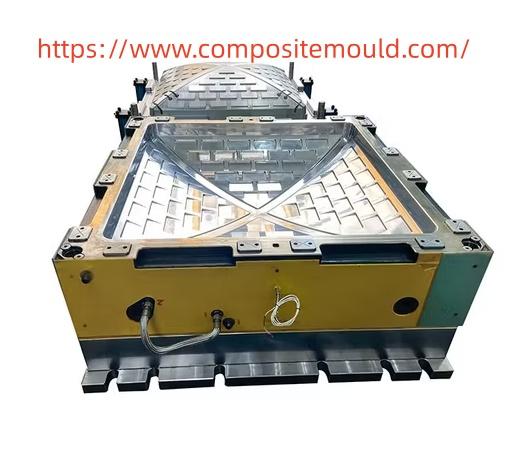
BMC Mould continues to play an important role in manufacturing because many industries require components with stable dimensions, efficient production processes, and reliable long term performance. As industrial products become more specialized, companies often look for tooling partners that understand design details, material behavior, and production planning. Selecting the right manufacturing partner is not simply about purchasing tooling. It is about building a process that supports product quality, production efficiency, and future development.
Many industries depend on bulk molding compound technology because it allows manufacturers to create complex shapes while maintaining repeatable production. Electrical equipment manufacturers often require insulated housings and structural parts. Automotive companies use molded components for selected interior and exterior applications. Construction projects benefit from durable industrial parts, while transportation equipment producers value lightweight yet practical solutions. These diverse applications require careful engineering and precise manufacturing throughout the project.
Successful production starts with detailed communication. Before manufacturing begins, experienced engineering teams usually review drawings, material requirements, product dimensions, expected production volume, and assembly conditions. Early technical discussions help identify potential challenges before machining starts, reducing unnecessary revisions later in the project.
Material selection is another important consideration. Different molding compounds offer different characteristics depending on the application. Factors such as heat resistance, electrical insulation, dimensional stability, surface appearance, and mechanical performance should all be evaluated according to actual working conditions instead of relying on general assumptions.
Manufacturing precision also influences production efficiency. Accurate machining, consistent cavity dimensions, and well designed cooling systems contribute to stable production cycles. Regular inspections during fabrication help verify that every stage meets design expectations before the finished tooling enters production.
Maintenance planning should never be overlooked. Well maintained tooling generally provides more consistent production results over extended operating periods. Routine cleaning, scheduled inspections, wear monitoring, and preventive servicing help reduce unexpected downtime while supporting smoother manufacturing operations.
Modern production projects also benefit from digital engineering technologies. Three dimensional modeling, simulation software, and precision machining equipment allow engineering teams to verify design concepts before manufacturing begins. These technologies help reduce unnecessary modifications and improve communication between customers and production teams.
Flexibility has become increasingly valuable for manufacturers serving multiple industries. Product specifications often change as customer requirements evolve. Engineering teams capable of supporting design adjustments, prototype discussions, and production optimization provide additional value throughout the entire project instead of only during initial manufacturing.
At Compositemould, engineering cooperation remains an important part of every project. The company works with customers from different industries by supporting design communication, manufacturing planning, machining, inspection, and production preparation. Every project receives attention according to its technical requirements, application environment, and production objectives, allowing customers to develop solutions that fit their own manufacturing needs.
Quality management involves more than checking finished products. Material verification, machining accuracy, process monitoring, dimensional inspection, and final validation all contribute to consistent manufacturing performance. Careful documentation also improves traceability and supports future maintenance when production continues over many years.
Global manufacturers increasingly value stable communication during international cooperation. Clear production schedules, transparent progress updates, technical documentation, and responsive discussions help reduce uncertainty throughout the manufacturing process. Reliable communication supports smoother project management from initial inquiry through delivery.
As industries continue introducing new products, tooling requirements will continue evolving alongside material innovations and manufacturing technologies. Businesses that evaluate engineering capability, production experience, technical communication, inspection procedures, and long term cooperation potential often build stronger manufacturing partnerships capable of supporting future product development. Companies interested in learning more about industrial tooling solutions and available manufacturing capabilities can visit Compositemould at https://www.compositemould.com/product/ to review product information and discuss project requirements with the engineering team.

 English
 Arabic
 French
 Portuguese
 Deutsch
 Turkish
 Dutch
 Italiano
 Russian
 Romaian
 Portuguese (Brazil)
 Greek