
Electromagnetic Compatibility Filtration Market Segmentation Analysis by Component, Frequency Range, and Industry Vertical
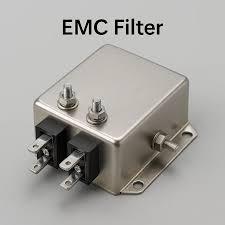
The global transition toward sustainable energy relies heavily on massive battery energy storage systems and utility-scale solar farms to capture clean electricity and feed it reliably into the municipal grid. These renewable energy facilities utilize sophisticated power inversion systems and bi-directional DC-to-DC converters to manage the flow of electricity between the solar panels, battery banks, and high-voltage transmission lines. The Electromagnetic Compatibility Filtration Market Segment demonstrates the absolute necessity of installing advanced high-power filters within these inverter cabinets to suppress the high-frequency switching harmonics generated by modern silicon carbide and gallium nitride transistors. Without effective filtration, these rapid switching frequencies can escape onto the utility grid, causing severe power quality degradation, overheating local transformers, and interfering with nearby residential electronics.
In addition to protecting the public utility grid, robust filtration networks are vital for protecting the internal health and management systems of the energy storage facility itself. Modern battery banks contain thousands of individual lithium-ion cells monitored by delicate, low-voltage battery management system microchips that track cell temperatures and voltages in real time. The intense electromagnetic noise from the main power inverters can easily corrupt these microchip readings, leading to inaccurate state-of-charge calculations or preventing the system from detecting a critical over-temperature condition. By isolating these sensitive control circuits with high-performance common-mode chokes and low-pass filter networks, operators can ensure the safe, efficient, and long-term reliable operation of utility-scale green energy infrastructure.
Why do modern solar inverters utilize silicon carbide and gallium nitride transistors? These advanced semiconductor materials allow transistors to switch electricity much faster and at higher temperatures, significantly increasing the overall energy efficiency and reducing the size of the inverter.
What is the function of a battery management system in a large-scale energy storage facility? The system monitors the voltage, temperature, and health of individual battery cells, ensuring balanced charging and preventing dangerous conditions like overcharging or thermal runaway.
➤➤➤Explore MRFR’s Related Ongoing Coverage In Semiconductor Industry:
Ar And Vr Smart Glasses Market
Digital Door Lock Systems Market

 Arabic
 French
 Spanish
 Portuguese
 Deutsch
 Turkish
 Dutch
 Italiano
 Russian
 Romaian
 Portuguese (Brazil)
 Greek