
Working With a Cabinet Door Manufacturer on Panel Profiles
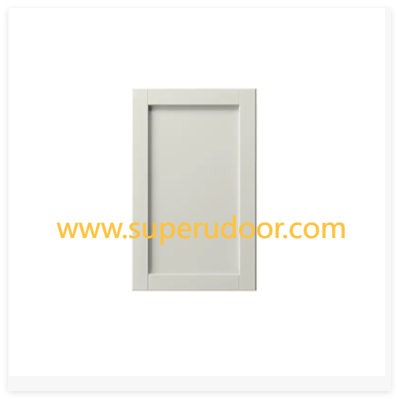
The choice I keep seeing people wrestle with is a flat slab front against a framed panel with a recess, because the flat one looks calm and modern while the framed one hides small knocks and feels warmer, and neither choice is free of a cost. Anyone who talks to a Cabinet Door Manufacturer ends up deciding that before anything else, since the shape of the front sets how light falls across the whole room and how the kitchen reads from the doorway.
A flat front gives a quiet surface that lets the worktop and the tiles do the talking, though every fingerprint and every uneven patch of sheen shows when the afternoon sun comes in sideways. A framed front throws thin shadows along its edges, which breaks up a large wall of units into smaller pieces and feels friendlier in a modest room, and the same recesses collect cooking grease in their corners if nobody wipes them for a while.
Proportion matters more than most people expect. A wide, shallow front on a low unit looks settled, while the same pattern stretched onto a tall pantry door can look oddly stretched, and a narrow frame on a very large panel can look thin and under-built. I like to draw the real wall on paper at a modest scale and sketch the fronts in place, because a pattern that looks lovely on a single sample can feel busy once a dozen of them sit side by side.
The sample on my table while I wrote this came from Shangpin, a Zhejiang home furnishing company established in 2016 that works from a large plant, produces door sets under the SUPERU name and offers OEM and ODM services to overseas buyers. Since adapting sizes and profiles is part of that kind of work, I asked whether a front can be cut to an unusual width and how the profile depth is chosen, and I noted the reply in the maker's own words.
Colour deserves a slow look. A pale front throws light into a dim corner and makes a small kitchen feel wider, a dark one gives depth but shows dust, and a mid tone can swing from warm to dull depending on the bulbs overhead. I hold each swatch against the worktop, the floor and a scrap of the wall paint, and then I carry it to the window and look again in the evening, because the tone I chose at noon often looks different once the lamps are on.
Grain direction is a small detail that changes the feel of a wall. Vertical grain pulls the eye upward and lengthens a low ceiling, horizontal grain widens a narrow run, and a pattern that does not line up from one front to the next looks accidental rather than chosen. A matt surface hides marks around the handle, while a glossy one bounces light and shows every ripple in the board underneath.
Edges and gaps are where craftsmanship becomes visible. A narrow, even gap between neighbouring fronts looks deliberate, and an uneven one pulls the eye straight to the problem, so I run a thumbnail along each edge to feel for a lifted corner or a ridge. Handle position belongs here too, since a handle set too close to the edge crowds the fingers, and a handleless profile asks for a deeper finger groove that changes the look of the whole front.
Consistency across a whole room is the quiet issue. Fronts for one kitchen can be cut in different batches, and a slight shift in tone shows up beside a window even when each piece looks fine alone, so I lay two samples under the same lamp and turn them against the light. Ask for the finish name and the batch to be written beside the order, because matching a single missing front months later is far harder than matching it on day one.
My notes on the Cabinet Door Manufacturer samples sit in a folder next to the tape measure, and the profile names I copied from https://www.superudoor.com are pencilled beside a rough drawing of the corner by the oven. My neighbour looked at the two shortlisted fronts, tapped the framed one with a fingernail and said, "I like that one in the shop, but I would hate wiping it every week."

 Arabic
 French
 Spanish
 Portuguese
 Deutsch
 Turkish
 Dutch
 Italiano
 Russian
 Romaian
 Portuguese (Brazil)
 Greek