
How Can Buyers Select a Flat Connector for Assembly?
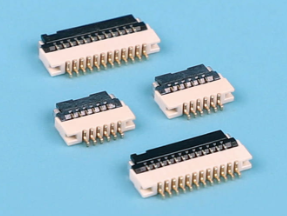
Flat Connector selection is an important consideration when designing electronic products that use flexible printed circuits. For purchasing teams, engineers, and product developers, choosing a suitable model involves more than checking its external dimensions. Pin count, pitch, cable thickness, contact orientation, locking structure, and PCB layout all influence whether a component fits the intended design. Before requesting a quotation or confirming an order, buyers should review these technical details and communicate their requirements clearly to the manufacturer.
Start With the Actual Cable Specifications
The flexible cable should be the starting point of the selection process. Buyers need to confirm its width, thickness, contact length, conductor arrangement, and insertion direction. These details help determine whether the proposed socket can accommodate the cable correctly.
A drawing is useful, but it should include sufficient information for technical review. If the project already has a cable sample, providing it alongside the drawing can help the engineering team check dimensions and connection details. Buyers should also identify whether the cable is a new design or an existing component being replaced.
For projects with several cable versions, label each drawing and sample clearly. This reduces the possibility of confusing similar-looking parts during quotation and sample evaluation.
Match Pitch and Pin Count With the Circuit Layout
Pitch refers to the distance between adjacent contacts. It influences the component's overall width and the spacing available for electrical connections. A smaller pitch may support a compact layout, while a larger spacing may suit designs with different dimensional or assembly requirements.
Buyers should confirm the required number of circuits and compare it with the PCB footprint. The number of pins alone does not determine compatibility. The contact arrangement, body dimensions, mounting position, and available board area also need to be checked.
For example, the manufacturer's product range includes models with 0.3mm and 0.5mm pitch options, alongside different heights and structural designs. Engineers should compare the actual product drawing with their board layout rather than relying on a general product description.
Check Contact Orientation and Insertion Direction
Contact orientation is another detail that deserves attention. Depending on the design, the exposed contacts on the flexible cable may need to face upward or downward when inserted. Selecting the wrong orientation can prevent the cable from making the intended electrical connection.
Buyers should review the cable's contact side and the socket's contact position together. They should also confirm whether the cable enters from the front, rear, or another specified direction.
These details are particularly relevant when the available installation space is limited. A component may match the pitch and pin count but still be unsuitable if its insertion direction conflicts with nearby parts or the device enclosure.
Compare Locking Structures and Assembly Access
Different locking structures serve different assembly needs. ZIF designs use a mechanism that reduces the insertion force required when connecting a flexible cable. Other designs may use different retention arrangements, depending on the intended application.
When comparing options, buyers should consider how often the cable may need to be removed, how much working space is available, and whether operators can access the locking mechanism during assembly or maintenance.
The opening direction and movement of the lock should also be checked against the surrounding components. A design that looks suitable in an isolated drawing may be difficult to operate after installation inside a compact enclosure.
Review Electrical and Environmental Requirements
Mechanical compatibility is only one part of the selection process. Buyers should also confirm current rating, voltage rating, contact resistance, insulation resistance, and operating temperature requirements.
These values should be evaluated against the actual circuit conditions and the manufacturer's published specifications. If the device operates in an environment involving vibration, temperature changes, or repeated handling, explain those conditions during the technical discussion.
Material and finish information may also be relevant. Housing materials, terminal alloys, and plating options can influence product characteristics and should be reviewed according to the intended application. Avoid assuming that two components with similar dimensions have identical electrical or environmental performance.
Request Samples and Check the Assembly Process
A sample evaluation gives the engineering team an opportunity to verify the selected model before a larger order is placed. Check cable insertion, locking operation, contact alignment, mounting dimensions, and soldering compatibility.
It is also useful to conduct an assembly trial using the actual PCB and cable. This can reveal clearance issues or handling difficulties that may not be obvious from separate component drawings.
If a problem appears, record the relevant dimensions and provide photographs or marked-up drawings to the manufacturer. Specific feedback makes it easier to identify whether the issue relates to the cable, board layout, or component selection.
Confirm Documentation and Production Details
Before approving an order, buyers should establish which drawing revision, part number, and sample version will serve as the production reference. They should also confirm order quantity, packaging requirements, inspection arrangements, and delivery expectations.
For recurring projects, retaining approved samples and technical documents can support communication between purchasing, engineering, and quality teams. Any proposed specification change should be reviewed before it is applied to subsequent batches.
A clear purchasing record helps reduce misunderstandings when the project moves from development into regular production. It also gives both parties a shared reference for discussing product consistency and future requirements.For buyers developing compact electronic devices, display assemblies, control boards, and other products using flexible circuit connections, wendaelectronics offers a range of FPC connection solutions with different pitches, heights, contact orientations, and locking structures. The company also provides product development and manufacturing services for electronic connection components. Visit https://www.wendaelectronics.com/ to review its product range and contact the team with your drawings, cable specifications, and project requirements.

 Arabic
 French
 Spanish
 Portuguese
 Deutsch
 Turkish
 Dutch
 Italiano
 Russian
 Romaian
 Portuguese (Brazil)
 Greek