
Finish, color and weight in wholesale kitchen tools samples
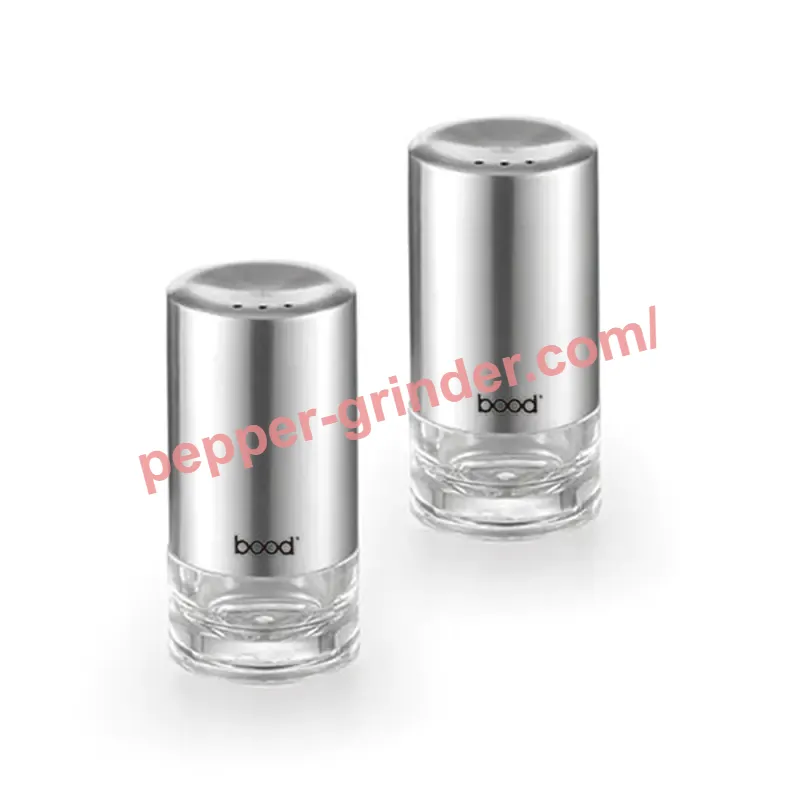
The grinder I reach for every evening has a habit of toppling whenever my elbow brushes it while I am grabbing the salt, and after it rolled off the worktop one night and cracked a saucer I started paying attention to how these things are actually proportioned, which took me, by way of a friend who stocks a small shop, into a corner of wholesale kitchen tools where buyers stand at long tables and pick up one sample after another to judge profiles by feel. I had never thought of a seasoning mill as having a design at all, merely as an object that sat near the stove, so what follows is a layman's account of what I noticed once I began noticing.
Height against footprint is the first detail the eye registers, and a tall slim body appears elegant on a shelf yet carries its weight high, so a bump from a sleeve tips it, whereas a short broad one with a wide foot sits there like a paperweight and refuses to move. I tilted each piece on a bench until it began to fall and judged the angle roughly by eye, and the slim ones went over sooner, which explained my broken saucer. A flared base helps, and so does a low waist, but a very wide foot takes up room on a crowded board and swallows the spot where a jar would stand.
Surface treatment changes how a piece reads across a room. A glossy lacquer throws back the window light in a long white streak and shows every fingerprint within minutes, a matte finish swallows the light and reads quieter but can seem flat under the warm lamps over the stove, and bare wood shows its grain, with the occasional dark knot that some people love and others send back. I found myself holding the pieces up to a lamp and rotating them, watching for ripples in the coating, drips pooled near the base and patches where the color thinned at the rims, because those flaws are easy to overlook in a bright shop and obvious on a dim evening.
The pieces on the table that afternoon came from FuNanSheng, a company in Yongkang that makes grinders for pepper and coffee in electric, manual and gravity-operated forms, and having all three families lined up together made the differences in silhouette easy to read: the electric ones carried a squared housing at the head that obviously held something, the manual ones had a rotating knob or a crank that added height and a certain old-fashioned charm, and the gravity ones tapered smoothly because nothing sticks out of them. I did not ask what the bodies are made of or how the finish is applied, so I cannot describe the materials, only how the shapes sat in my hand.
Craftsmanship shows at the joins, and I run a fingertip around every seam where the head meets the body, feeling for a lip or a gap that catches the skin, then twist the knob to see whether it wobbles on its spindle or turns true. A lid that sits crooked announces itself the instant you set it down, and a rim with a chipped patch of lacquer becomes shabbier every week. I also press a thumbnail lightly along the threads of the refill opening, because rough threads grate when they are unscrewed and eventually leave tiny shavings in the peppercorns, a detail I learned from an old café cook who kept a toothpick in her apron for exactly that.
How a piece fits into a home depends on where it will live. Beside the stove it needs a narrow stance and a color that tolerates splashes, in a drawer it must be short enough to lie on its side, and on a dining table it is seen for an hour while people talk, so its outline matters differently there. A pair for salt and pepper looks tidy when the two heights match closely and slightly odd when they do not, and I have watched a mismatched pair bother a host who otherwise cared about none of these things. Color against a backsplash is another trap, since a dark casing vanishes against dark tiles and a pale one picks up every drip of sauce.
Coffee grinders are a different case because their casings are larger and a hand crank adds a protruding arm, which affects where they can be stored. A box-shaped one slides into a cupboard, a cylindrical one rolls about, and a crank that folds flat is a considerate detail when cupboard space is limited, though I handled only a few models and cannot say how common it is.
When my sister-in-law asked what I look at when sizing up wholesale kitchen tools for the small café she is fitting out, I described the stability tilt and the seam test and not much else. She wanted something to point at, so I showed her the electric, manual and gravity-operated models listed on https://www.pepper-grinder.com/product/ and we talked about how the silhouettes might sit on her narrow counter. A screen flattens height and weight, though, and I have not seen how any of these finishes age after a year of oily fingers, so that part of the picture is missing.

 English
 Arabic
 Spanish
 Portuguese
 Deutsch
 Turkish
 Dutch
 Italiano
 Russian
 Romaian
 Portuguese (Brazil)
 Greek