
What Influences KSD 301 Steam Iron Thermostat Purchasing Decisions?
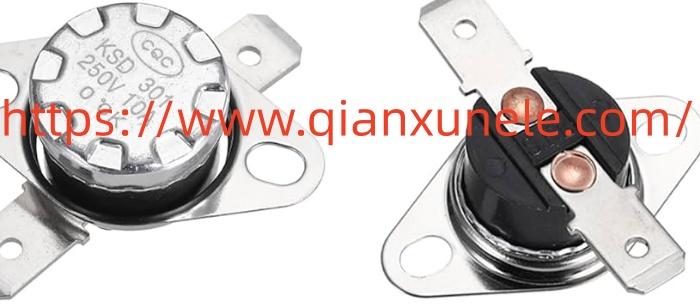
KSD 301 Steam Iron Thermostat is a temperature-sensitive electrical component designed for heating control applications in household ironing equipment. It responds to changes in surrounding temperature and switches the electrical circuit according to its preset operating parameters. For international buyers, selecting a suitable model requires careful consideration of technical specifications, installation conditions, material construction, and manufacturing arrangements. A clear understanding of these factors can help purchasing teams communicate their requirements and coordinate component selection with appliance development.
Define the Application Before Requesting a Quotation
Every appliance project has its own design requirements. Heating capacity, internal layout, operating temperature, and electrical configuration may differ between product models.
Before contacting a supplier, buyers should prepare basic application information. This may include the appliance type, expected operating conditions, rated voltage, current requirements, and available installation space.
Providing these details makes technical communication more productive. Instead of comparing products only by appearance or price, purchasing teams can focus on whether the proposed component matches their actual application.
Manufacturers should also explain whether the component will be used in a new product design or replace an existing part. This distinction can influence sample selection and technical evaluation.
Examine Temperature Response Characteristics
Temperature response is a central consideration when evaluating a heating control component. Buyers should understand the activation point, reset point, and permitted temperature tolerance.
The activation temperature determines when the internal switching mechanism changes its state. The reset temperature indicates when it returns after cooling. These values influence the heating cycle and should correspond with the appliance's operating requirements.
A bimetal mechanism is commonly used in mechanical temperature control designs. It consists of two bonded metal layers with different expansion rates. When heated, the element bends and activates the contact mechanism.
Buyers should request detailed specifications rather than relying on general descriptions. They can also ask about available temperature settings when their application requires a particular operating range.
Review Electrical and Contact Specifications
Electrical compatibility is another important part of product evaluation. The selected component should match the appliance circuit in terms of voltage, current, and contact arrangement.
Purchasing teams should confirm the following information:
Rated operating voltage.
Current carrying capacity.
Contact configuration.
Terminal dimensions and materials.
Insulation and electrical testing requirements.
These details can affect wiring design, assembly arrangements, and functional testing.
It is also helpful to discuss the expected electrical load and switching frequency. Providing this information allows the supplier to assess the application more accurately and clarify whether the proposed configuration is appropriate.
Compare Materials and Physical Dimensions
Material construction influences the component's suitability for different operating environments. Buyers should ask about the bimetal element, contact materials, external housing, and terminal construction.
The housing should fit the available installation space and provide appropriate support for the internal mechanism. Terminal positions must also correspond with the appliance wiring arrangement.
Dimensional compatibility should be verified before bulk purchasing. Even a small difference in mounting measurements may require changes to the appliance assembly.
For this reason, buyers can request technical drawings, product photographs, and physical samples. These materials help engineering teams compare the proposed design with their existing specifications.
Evaluate the Supplier's Production Management
A supplier's manufacturing arrangements can influence order consistency and project coordination. Buyers should understand how materials are selected, how assembly operations are managed, and which inspection procedures are used.
Relevant quality checks may include:
Incoming material verification.
Product dimension measurements.
Activation and reset temperature testing.
Electrical contact function checks.
Finished product inspection.
The actual inspection program should correspond with the product design and agreed specifications.
For manufacturers handling repeated orders, it is also useful to discuss batch management, production records, and packaging arrangements.
qianxunele provides temperature control components for electrical appliance applications. Buyers can communicate their project requirements and request product information to evaluate available configurations before making purchasing decisions.
Use Samples to Verify Application Compatibility
Sample testing provides an opportunity to evaluate a component under actual working conditions. It allows engineering teams to examine its response after installation rather than depending entirely on catalogue information.
For ironing appliances, testing may involve repeated heating cycles, contact switching, mounting stability, and temperature response. The evaluation should follow the intended operating conditions and relevant technical requirements.
If the sample does not match the expected results, buyers should record the differences and discuss possible adjustments with the supplier.
This stage is particularly useful when developing a new appliance model or replacing an existing component with a different specification.
Discuss Custom Requirements and Delivery Plans
Some buyers may require particular dimensions, terminal arrangements, or temperature settings. These details should be communicated before production begins.
Technical drawings and reference samples can help suppliers understand the requested configuration. Buyers should also confirm whether the proposed changes affect production arrangements, sample preparation, or order quantities.
Beyond technical details, international purchasing teams should discuss packaging, delivery schedules, minimum order quantities, and documentation requirements.
Clear communication helps both parties establish realistic expectations and organize the purchasing process more efficiently.Selecting an appropriate heating control component involves technical evaluation, practical testing, and supplier coordination. By preparing application information, checking electrical and temperature parameters, reviewing physical construction, and confirming production details, buyers can make purchasing decisions based on their actual requirements. For further product information and business inquiries, qianxunele welcomes international manufacturers and distributors to visit https://www.qianxunele.com/product/ and discuss their component requirements and potential cooperation.

 English
 Arabic
 French
 Spanish
 Portuguese
 Deutsch
 Turkish
 Dutch
 Italiano
 Russian
 Romaian
 Greek