
India Aerospace Steel Market Analysis by Product, Aircraft Type and Competitive Landscape
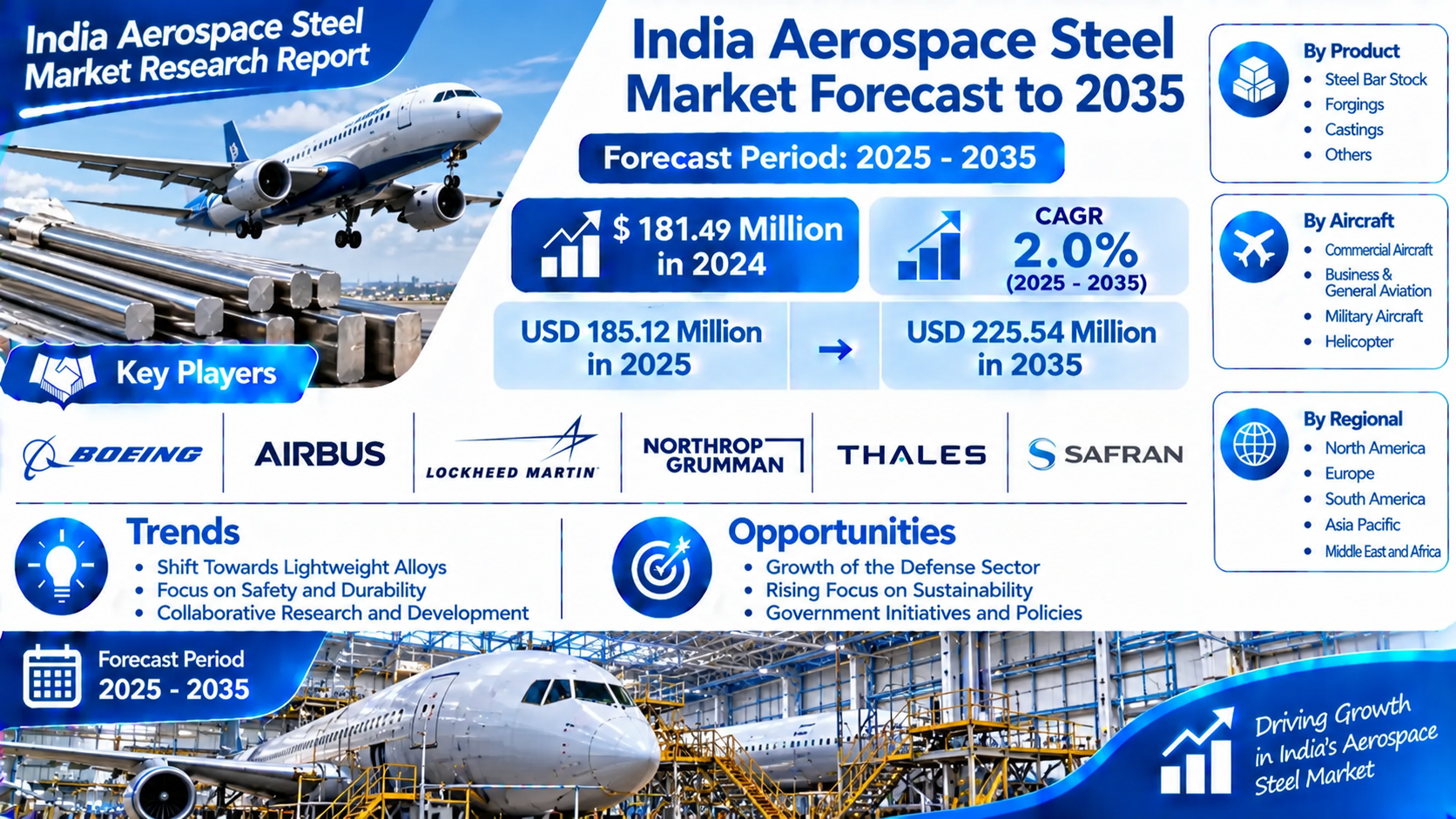
According to Market Research Future® (MRFR), the India Aerospace Steel Market is projected to increase from USD 185.12 million in 2025 to USD 225.54 million by 2035, registering a compound annual growth rate (CAGR) of 2.0% during the forecast period from 2025 to 2035. The market was valued at USD 181.49 million in 2024. Its outlook reflects the importance of steel products in aircraft manufacturing, alongside industry priorities involving material performance, safety, durability, and the development of more efficient aerospace components. Demand across commercial, general aviation, and military aircraft categories forms an important part of the market's development.
India Aerospace Steel Market Size and Growth Outlook
The market's projected expansion indicates steady growth over the ten-year forecast period. From USD 181.49 million in 2024, the market is expected to reach USD 185.12 million in 2025 before advancing to USD 225.54 million by 2035. The 2.0% CAGR reflects a measured growth trajectory rather than a rapid expansion cycle. This outlook provides a basis for evaluating the role of aerospace steel across aircraft-related manufacturing and the broader aviation and defense landscape in India.
Aerospace materials are expected to remain important to the production of aircraft components, where safety and durability are central considerations. Steel products are represented in several forms within the market, including bar stock, forgings, castings, and other products. These categories provide the framework for understanding the range of product formats included in the market assessment. Their relevance is connected to the varied material requirements associated with aircraft manufacturing.
Product Segmentation: Bar Stock, Forgings and Castings
The India Aerospace Steel Market is segmented by product into steel bar stock, forgings, castings, and others. These product categories represent different forms in which aerospace steel is supplied and incorporated into manufacturing activities. Their inclusion highlights the diversity of steel products considered in the aerospace supply chain.
Steel bar stock forms one of the identified product categories, while forgings and castings represent additional product segments. The others category completes the segmentation framework for products not separately classified in the report. Demand across these categories is linked to aircraft manufacturing requirements and the importance of material reliability in aerospace applications.
The market's product structure also provides a useful perspective on how manufacturers and suppliers serve different requirements across the aircraft industry. As the sector continues to emphasize safety and durability, product quality and suitability remain relevant considerations. The reported trend toward lightweight alloys adds another dimension to material selection, highlighting the industry's interest in balancing material performance with aircraft efficiency.
Aircraft Segmentation and Demand Areas
By aircraft, the market covers commercial aircraft, business and general aviation, military aircraft, and helicopters. These categories reflect the different areas of aviation represented in the market. Each contributes to the overall demand environment for aerospace steel, although the report does not specify individual segment shares or growth rates.
Commercial aircraft represent an important category within the segmentation structure. Business and general aviation add another area of demand, while military aircraft and helicopters broaden the market's coverage across defense and other aviation requirements. The inclusion of these aircraft categories demonstrates that the market is not limited to a single type of aircraft manufacturing activity.
The distinction between commercial and military aircraft is particularly relevant when examining the market's opportunities. Commercial aviation and defense-related requirements operate across different areas of the aerospace industry, while both remain connected to the need for dependable materials. The market's aircraft segmentation therefore provides a framework for examining demand across India's wider aviation landscape.
Key Trends Influencing the Market
Three trends identified in the market are the shift towards lightweight alloys, a focus on safety and durability, and collaborative research and development.
The shift towards lightweight alloys reflects the aerospace industry's interest in material choices that support weight-conscious aircraft design. This trend is relevant to the broader evolution of aerospace materials, where manufacturers must consider performance requirements alongside aircraft efficiency. It also illustrates the importance of material development and selection in a sector where engineering requirements are demanding.
Safety and durability remain central considerations in aerospace manufacturing. Materials used in aircraft-related applications must be evaluated in relation to the reliability and service requirements of the finished components. This emphasis supports continued attention to material quality and consistency across the aerospace supply chain.
Collaborative research and development is another identified trend. Cooperation among industry participants can support the exchange of technical knowledge and the exploration of material-related improvements. Research partnerships also provide a channel for addressing evolving manufacturing requirements and supporting innovation in aerospace materials.
Opportunities Across Defense and Sustainability
The market presents opportunities associated with growth in the defense sector, a rising focus on sustainability, and government initiatives and policies. Defense-sector growth offers an important area of potential demand across military aircraft and related aerospace activities. As defense requirements evolve, the need for suitable materials remains relevant to the aircraft manufacturing ecosystem.
Sustainability is another area of opportunity. The industry's increasing attention to sustainability encourages consideration of material choices and manufacturing approaches that align with broader environmental priorities. This opportunity complements the trend toward lightweight alloys and ongoing research and development, although the specific commercial impact of these developments will depend on industry adoption.
Government initiatives and policies also form part of the market's opportunity landscape. Policy support can influence the wider environment in which aviation and defense-related industries operate. For aerospace steel suppliers, these developments are relevant because they may shape the conditions for industrial investment and future manufacturing activity.
Competitive Landscape and Industry Participants
The key players identified in the India Aerospace Steel Market include Boeing, Airbus, Lockheed Martin, Northrop Grumman, Thales, and Safran. These companies represent prominent participants in the aerospace and defense ecosystem. Their inclusion provides an overview of the competitive landscape associated with the market.
The industry's competitive environment is influenced by the requirements of aircraft manufacturers and aerospace-related organizations. Product suitability, reliability, safety considerations, and the ability to respond to changing material requirements are important factors in this environment. Collaborative research and development may also influence how participants approach material innovation and future manufacturing needs.
Market Outlook Through 2035
The India Aerospace Steel Market is projected to grow at a CAGR of 2.0% from 2025 to 2035, reaching USD 225.54 million by the end of the forecast period. Its development will be shaped by aircraft-related demand, product requirements, defense-sector opportunities, sustainability priorities, and government initiatives. Continued attention to safety, durability, lightweight materials, and collaborative research will remain relevant as the aerospace industry evaluates its material needs. The market's moderate growth outlook highlights a steady opportunity for participants serving India's aerospace steel supply chain.

 English
 Arabic
 Spanish
 Portuguese
 Deutsch
 Turkish
 Dutch
 Italiano
 Russian
 Romaian
 Portuguese (Brazil)
 Greek