
Lithium-Ion Battery Market: Emerging Trends Transforming the Global Energy Storage Industry
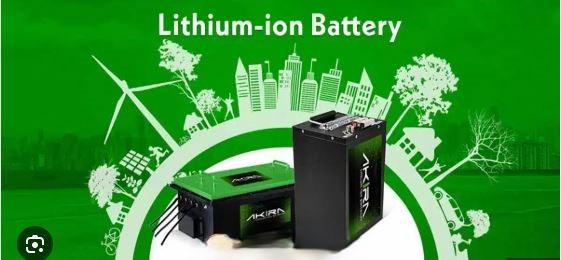
Electrifying Transport and Power Grids: Key Debates Shaping the Lithium-Ion Battery Industry in Group Discussions
In any structured group discussion on clean energy transitions, participants quickly realize that the Lithium-Ion Battery Market serves as the technological backbone linking electric vehicles, portable electronics, and renewable power storage. Rather than treating batteries as simple commodities, informed speakers examine how energy density, charging speed, cycle life, and thermal safety determine whether electrification goals succeed on schedule. When automakers and grid utilities announce multi-billion-dollar investments, roundtable debates frequently test whether supply chains can scale fast enough without triggering raw-material bottlenecks or consumer price spikes. Reviewing a detailed Lithium-Ion Battery Market analysis gives participants concrete context to evaluate how cell chemistry choices, manufacturing scale, and policy incentives interact across global industries.
During a lively exchange, moderators and peers typically push speakers beyond surface-level optimism to weigh competing operational trade-offs. High-nickel chemistries deliver longer driving ranges for passenger vehicles, yet lithium iron phosphate cells offer lower cost, stronger thermal stability, and independence from scarce cobalt supplies. Meanwhile, utility operators deploying stationary storage prioritize multi-thousand-cycle durability and fire suppression over ultra-lightweight packaging. Strong contributors connect these engineering decisions directly to commercial viability, charging infrastructure readiness, and total lifecycle emissions. Grounding arguments in clear trade-offs rather than broad slogans allows participants to address counterarguments persuasively and demonstrate balanced strategic judgment.
Frequently Asked Questions
Why is battery chemistry selection such a central point in group discussions on electrification? Different chemistries balance energy density, cost, safety, and mineral dependency differently, forcing automakers and grid operators to choose between maximum range, lower upfront price, or longer cycle life.
What is the strongest counterargument raised against rapid battery-driven electrification? Participants commonly point to upstream mineral concentration, refining bottlenecks, grid charging capacity limits, and end-of-life recycling gaps that can slow deployment or raise environmental and geopolitical risks.
➤➤➤Explore MRFR’s Related Ongoing Coverage In Semiconductor Industry:

 English
 Arabic
 Spanish
 Portuguese
 Deutsch
 Turkish
 Dutch
 Italiano
 Russian
 Romaian
 Portuguese (Brazil)
 Greek