
Saudi Surface Disinfectants Strengthen Hygiene Across Facilities
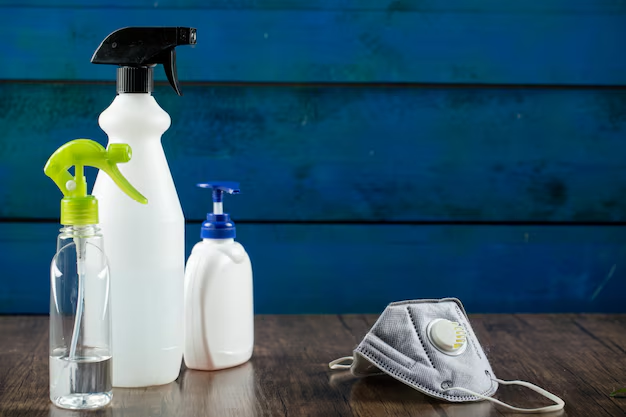
Surface disinfectants are becoming increasingly important across healthcare facilities, commercial properties, hospitality venues, food-service establishments, and other high-traffic environments in Saudi Arabia. Growing attention to infection prevention, facility hygiene, healthcare infrastructure, and consistent sanitation practices is encouraging wider use of products designed to reduce microbial contamination on frequently touched surfaces.
A recent study by Markntel Advisor states that the Saudi Arabia surface disinfectant sector was valued at USD 90.15 million in 2025 and is projected to grow from USD 98.43 million in 2026 to USD 140.21 million by 2032, registering a CAGR of 6.07% during 2026–2032. The Central Region accounted for approximately 34% of the industry in 2026. The industry’s development is being influenced by healthcare expansion, infection-prevention practices, commercial hygiene requirements, hospitality activity, and increasing attention to environmental cleaning.
Healthcare Strengthens Disinfectant Demand
Healthcare facilities represent an important application area for surface disinfectants because hospitals, clinics, laboratories, and other medical environments require systematic cleaning and disinfection practices.
Saudi Arabia’s Ministry of Health provides detailed environmental-cleaning guidance for healthcare facilities, including requirements concerning cleanable surfaces, compatibility with hospital disinfectants, cleaning equipment, and the availability of manufacturer instructions and safety data sheets. The Saudi Ministry of Health environmental-cleaning guidelines demonstrate the importance of structured cleaning and disinfection practices in healthcare environments.
Central Region Leads Regional Demand
The Central Region accounted for approximately 34% of Saudi Arabia’s surface disinfectant industry in 2026, according to Markntel Advisor. Riyadh’s concentration of healthcare facilities, government institutions, offices, commercial properties, and residential developments supports significant demand for hygiene products.
Saudi Arabia’s healthcare infrastructure also has a strong presence in the region. Official statistics show that Riyadh Region recorded the highest number of hospitals in the Kingdom in 2024, with 115 hospitals.
This concentration of healthcare and commercial infrastructure creates recurring requirements for professional cleaning and disinfection products.
Infection Prevention Remains a Priority
Infection prevention is closely connected with environmental hygiene. Surface contamination can occur through frequent contact with furniture, equipment, door handles, counters, and other commonly touched areas.
The Saudi Ministry of Health emphasizes environmental cleaning as part of infection-prevention practices in healthcare facilities. Its guidance also recommends that surfaces used in clinical areas should be cleanable, easy to maintain, and resistant to microbial growth.
These requirements create opportunities for disinfectant manufacturers offering formulations designed for different surface types and institutional applications.
Commercial Facilities Create Recurring Demand
Commercial properties such as offices, shopping centers, restaurants, hotels, airports, and entertainment venues require regular cleaning because of frequent visitor activity.
Surface disinfectants can be incorporated into routine cleaning programs for high-touch areas and shared spaces. Facility managers may prioritize products that provide consistent performance, convenient application, clear usage instructions, and compatibility with commonly used surfaces.
The expansion of commercial infrastructure and service-based businesses can therefore support recurring institutional demand.
Hospitality Expands Hygiene Applications
Saudi Arabia’s growing hospitality and tourism infrastructure is creating additional cleaning requirements. Hotels, resorts, restaurants, entertainment venues, and visitor facilities need regular cleaning across guest rooms, bathrooms, kitchens, reception areas, and common spaces.
High occupancy and frequent guest turnover can increase the frequency of cleaning activities. This creates opportunities for surface disinfectants supplied in professional formats, including larger containers, sprays, concentrates, and specialized formulations.
Food-Service Hygiene Supports Usage
Restaurants, commercial kitchens, catering operations, and food-service facilities also require appropriate cleaning and disinfection procedures. Surfaces that come into contact with food, preparation equipment, counters, and other kitchen areas need carefully managed cleaning processes.
Saudi Arabia’s infection-control auditing guidance emphasizes appropriate disinfectant concentration, contact time, and chemical documentation for certain food-related disinfection processes. The Ministry of Health infection-control auditing guide illustrates the importance of correct preparation and application practices.
Product Formats Improve Convenience
Surface disinfectants are available in sprays, liquids, wipes, concentrates, and other formats. Ready-to-use sprays can support quick cleaning in offices and households, while concentrated formulations can be suitable for professional cleaning operations.
Wipes can also provide convenient cleaning for high-touch areas and portable applications. Manufacturers can differentiate products by application method, packaging, surface compatibility, fragrance, and intended use.
Formulation Performance Matters
Different environments require different disinfectant characteristics. Healthcare settings may prioritize broad antimicrobial performance and compatibility with medical-area surfaces, while commercial users may emphasize ease of use and cost efficiency.
Product developers therefore need to balance antimicrobial effectiveness with material compatibility, drying characteristics, odor, application time, and user safety. Clear labeling and manufacturer instructions can further support appropriate product use.
Regulatory Compliance Supports Quality
Surface disinfectants used in institutional settings require careful attention to product information, safety documentation, dilution requirements, storage, and application procedures.
For professional users, access to safety data sheets and manufacturer instructions is particularly important. Saudi Arabia’s Ministry of Health guidance specifically notes the need for safety data sheets and manufacturer instructions for environmental cleaning products in healthcare facilities.
This creates opportunities for suppliers that combine product performance with strong technical documentation and customer support.
Innovation Creates Differentiation
Competition within the Saudi surface disinfectant industry is increasingly shaped by formulation performance, application convenience, packaging, product availability, and institutional relationships.
Manufacturers can differentiate through ready-to-use products, concentrated solutions, specialized healthcare formulations, wipes, and products designed for specific surface categories. Sustainability considerations may also encourage interest in concentrated formulations and packaging approaches that reduce material consumption.
Future Development Remains Hygiene-Focused
The Saudi Arabia surface disinfectant industry is developing alongside healthcare infrastructure, infection-prevention practices, commercial expansion, hospitality development, food-service activity, and growing attention to environmental hygiene. The increase from USD 98.43 million in 2026 to USD 140.21 million by 2032 indicates continued opportunities across healthcare, commercial, hospitality, institutional, and household applications.
Future development is likely to remain connected with healthcare sanitation, professional cleaning, convenient product formats, surface compatibility, documented application procedures, and improved formulation performance. As Saudi Arabia continues expanding healthcare and commercial infrastructure, surface disinfectants are expected to remain an important component of structured hygiene and infection-prevention practices.

 English
 Arabic
 French
 Spanish
 Portuguese
 Deutsch
 Turkish
 Dutch
 Italiano
 Russian
 Romaian
 Portuguese (Brazil)